
 888-970-5729
 1300+
1300+- Principales novedades sobre la crisis de los tanques de productos químicos hasta el martes 26 de mayo de 2026.
- La ciudad de Garden Grove publica información sobre cómo mantenerse al día.
- Resumen del incidente químico en Garden Grove
- Cronología del derrame del tanque de productos químicos de Garden Grove
- Acerca del producto químico tóxico involucrado: metacrilato de metilo
- Impacto en los residentes, escuelas y negocios de Garden Grove
- Refugios de evacuación y recursos de apoyo
- Monitoreo de la calidad del aire y la salud
- Respuesta del gobierno y declaraciones presidenciales de emergencia
- Qué deben hacer ahora los residentes de Garden Grove
- Opciones legales para los residentes afectados
- Cómo el abogado Jeff, especialista en accidentes de tráfico, puede ayudarle
A finales de mayo de 2026, una emergencia química en Garden Grove provocó el desplazamiento de decenas de miles de residentes y desencadenó uno de los incidentes con materiales peligrosos más graves ocurridos en el condado de Orange en los últimos tiempos. A continuación, presentamos la información más reciente sobre el derrame del tanque químico en Garden Grove, incluyendo lo sucedido, la situación actual y la información que deben conocer los residentes afectados.
Principales novedades sobre la crisis de los tanques de productos químicos hasta el martes 26 de mayo de 2026.
- Todas las órdenes de evacuación obligatoria se levantaron oficialmente el 26 de mayo de 2026, lo que permitió a los residentes desplazados regresar a sus hogares.
- Se mantiene activa una zona de exclusión alrededor de las instalaciones aeroespaciales de GKN para los equipos de materiales peligrosos y los equipos de emergencia.
- Más de 50.000 residentes de Garden Grove y de los alrededores del condado de Orange fueron evacuados en el punto álgido de la crisis.
- Los residentes que presenten síntomas de salud, daños a la propiedad, pérdida de ingresos u otras pérdidas pueden tener opciones legales.
La ciudad de Garden Grove publica información sobre cómo mantenerse al día.
Alertas de la ciudad con la información de emergencia más reciente.
Suscríbete a ALERTA OC visitando sus sitio web oficial o enviar mensajes de texto “ALERTA” a 888-777. Las siguientes plataformas de redes sociales también serán recursos útiles:
- Facebook: @Ayuntamiento de GardenGrove
- INCÓGNITA: @CityGardenGrove
- Instagram: @gardengrovecityhall
- Nextdoor: Ciudad de Garden Grove
- YouTube: @GardenGroveTV3
- Sitio web de la ciudad: ggcity.org/emergencia
Cuentas en redes sociales de la Autoridad de Bomberos del Condado de Orange
La ciudad de Garden Grove tiene un contrato con el Departamento de Bomberos del Condado de Orange (OCFA), por lo que las últimas noticias también se pueden encontrar en sus cuentas de redes sociales:
- Facebook: Autoridad de Bomberos de OCFire
- Instagram: @ocfireauthority
- X (anteriormente Twitter): @OCFireAuthority
Visite el sitio web de incidentes del condado de Orange.
Se pueden encontrar actualizaciones adicionales en el sitio oficial. Página del incidente del derrame químico en Garden Grove.
La ciudad también ha habilitado una línea telefónica de emergencia para los residentes que necesiten accesibilidad, transporte u otras necesidades de apoyo urgentes., que se atiende las 24 horas del día, los 7 días de la semana. Ese número de teléfono es: (714) 741-5444.
Resumen del incidente químico en Garden Grove
El Crisis de tanques químicos en Garden Grove Todo comenzó en las instalaciones de GKN Aerospace Transparency Systems en Western Ave., donde un tanque de productos químicos sobrecalentado convirtió una llamada de rutina por materiales peligrosos en una emergencia que duró varios días. GKN es una empresa aeroespacial de Garden Grove que fabrica ventanas de cabina, cúpulas y parabrisas para la industria aeroespacial.
El tanque de GKN Aerospace contenía metacrilato de metilo (MMA), un producto químico industrial volátil, inflamable y tóxico. Cuando este gran tanque de almacenamiento en Garden Grove comenzó a sobrecalentarse y a liberar vapores, los bomberos del Condado de Orange, el Departamento de Policía de Garden Grove, la policía local y las agencias federales se movilizaron rápidamente. El principal temor era una explosión catastrófica conocida como "explosión de vapor en expansión de líquido en ebullición" (BLEVE, por sus siglas en inglés). Esto habría representado una grave amenaza para las comunidades aledañas.
El primer derrame químico se reportó el jueves 21 de mayo. Las órdenes de evacuación se extendieron por el oeste de Garden Grove y a ciudades cercanas, como Cypress, Stanton, Anaheim, Buena Park y Westminster, para el viernes. En su punto álgido, la crisis química de Garden Grove desplazó a más de 50 000 personas y provocó la declaración del estado de emergencia en el condado de Orange.
Cronología del derrame del tanque de productos químicos de Garden Grove
Jueves, 21 de mayo — Respuesta inicial ante materiales peligrosos
Para brindar medidas de protección de emergencia, se envió asistencia especial a las instalaciones de GKN Aerospace después de que el tanque en Garden Grove comenzara a sobrecalentarse. Se activó un sistema de enfriamiento por rociadores para reducir el calor alrededor del tanque afectado, y equipos de materiales peligrosos evaluaron si la situación podía estabilizarse. Las órdenes iniciales de evacuación se limitaron a partes de West Garden Grove, ya que las comunidades circundantes permanecieron a salvo de la exposición.
Viernes, 22 de mayo — Se amplía la zona de evacuación en el condado de Orange.
Una válvula defectuosa provocó que el tanque de 34 000 galones de metacrilato de metilo se sobrecalentara aún más, lo que generó temores de una explosión de vapor. La válvula atascada impidió que los equipos descargaran el tanque o aliviaran la presión de forma segura, lo que llevó a las autoridades a ampliar significativamente la zona de evacuación.
Las zonas de evacuación se extendían al norte de la avenida Trask, al sur de la calle Ball, al este de la calle Valley View y al oeste de la calle Dale. Se habilitaron refugios de emergencia para los residentes desplazados. El Distrito de Gestión de la Calidad del Aire de la Costa Sur confirmó que, hasta la tarde del viernes, no se habían detectado contaminantes en el aire.
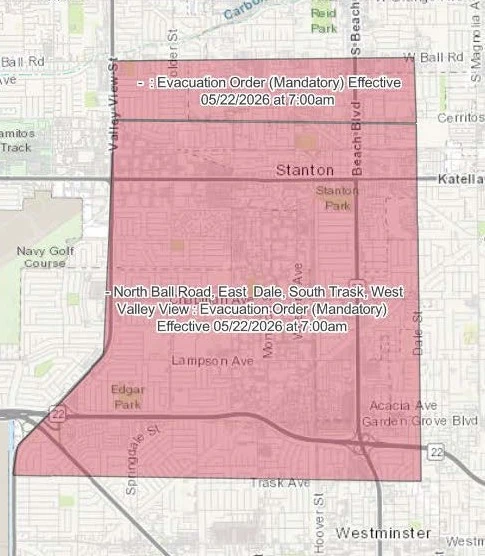
Sábado, 23 de mayo — Se declara el estado de emergencia.
El gobernador Gavin Newsom emitió una declaración de emergencia para el condado de Orange en respuesta al incidente químico tóxico en curso en las instalaciones aeroespaciales de Garden Grove. Proclamación de emergencia del gobernador Contribuyó a movilizar personal de emergencia, recursos de refugio y apoyo estatal. La temperatura de los tanques subió a aproximadamente 90 °F y posteriormente superó los 100 °F, y los bomberos advirtieron que la situación seguía siendo grave.
Domingo, 24 de mayo — Se encuentra una grieta en el tanque dañado
Durante una misión nocturna, los bomberos descubrieron una grieta en el tanque dañado. Los bomberos confirmaron que la grieta había liberado presión, lo que permitió una situación más estable, aunque persistía el riesgo de una pequeña explosión. La Autoridad de Bomberos del Condado de Orange continuó utilizando drones y equipos especializados para monitorear la temperatura y la estabilidad estructural del tanque, en lugar de arriesgarse a realizar operaciones a corta distancia.
Lunes, 25 de mayo — Amenaza BLEVE eliminada
Se eliminó la amenaza de una explosión por expansión de vapor de líquido en ebullición, lo que representó un punto de inflexión crucial en la crisis química de Garden Grove. La temperatura interna del tanque químico de Grove se redujo de más de 100 °F a aproximadamente 92 °F mediante operaciones de enfriamiento continuas.
A medida que la situación se estabilizó, el número de residentes bajo órdenes de evacuación disminuyó de más de 50 000 a aproximadamente 16 000 para el lunes por la noche. Las órdenes de evacuación se mantuvieron vigentes en algunas áreas, y las autoridades instaron a los residentes a permanecer fuera de la zona de evacuación hasta nuevo aviso.
Martes, 26 de mayo — Se levantan las órdenes de evacuación obligatoria
Todas las órdenes de evacuación obligatoria fueron levantadas oficialmente y aproximadamente 65% de residentes evacuados originalmente En varias ciudades se permitió a los residentes regresar a sus hogares. La Autoridad de Bomberos del Condado de Orange confirmó que la amenaza de una explosión, incendio o fuga química catastrófica había sido completamente eliminada.
Los equipos de emergencia continúan manteniendo un perímetro operativo restringido alrededor de las instalaciones aeroespaciales de GKN, mientras que los equipos especializados en materiales peligrosos inspeccionan los sistemas de tanques químicos, la infraestructura de drenaje y los equipos industriales cercanos.
Acerca del producto químico tóxico involucrado: metacrilato de metilo
El tanque dañado contenía aproximadamente entre 6000 y 7000 galones de metacrilato de metilo (MMA), un producto químico industrial utilizado en la fabricación de plásticos, acrílicos y resinas. Bajo calor y presión, el MMA puede vaporizarse rápidamente, arder y generar una nube tóxica, razón por la cual el riesgo de explosión de vapor motivó una evacuación a gran escala.
Efectos en la salud de la exposición al metacrilato de metilo
Según el Departamento de Salud Pública de California, el MMA puede causar:
- Ardor o irritación en los ojos
- Irritación o erupción cutánea
- Tos o irritación de garganta
- Sibilancias u opresión en el pecho
- Dolores de cabeza y mareos
- Náuseas y dificultad para respirar
Si el tanque se hubiera roto, podría haber emitido un vapor dulce con olor a frutas. Se recomendó a los residentes que informaran de inmediato a las autoridades locales sobre cualquier olor afrutado inusual.
Los niños, los adultos mayores, las mujeres embarazadas y las personas con asma, EPOC o afecciones cardíacas corren un mayor riesgo y deben extremar las precauciones al regresar a casa.
Impacto en los residentes, escuelas y negocios de Garden Grove
La crisis de los tanques de productos químicos alteró la vida cotidiana en Garden Grove, California, y en toda la región durante casi una semana.
Escuelas y familias
El cierre de escuelas afectó a familias de todo el distrito escolar unificado de Garden Grove y distritos cercanos. Los planteles, incluida la preparatoria Rancho Alamitos, permanecieron cerrados mientras las autoridades esperaban la autorización sobre la calidad del aire y la seguridad pública.
Negocios locales
Restaurantes, trabajadores por horas y pequeños negocios ubicados a lo largo de Garden Grove Blvd. y Garden Grove Boulevard sufrieron importantes pérdidas económicas. Muchos negocios dentro de la zona de evacuación se vieron obligados a cerrar sin recibir instrucciones claras sobre la cobertura del seguro ni sobre los plazos de reapertura.
Impacto regional más amplio
El Festival de la Fresa de Garden Grove continuó fuera de la zona de peligro, y destinos regionales como Disneyland permanecieron abiertos, aunque ambos sufrieron retrasos y desvíos. Los residentes de Fountain Valley, Huntington Beach y otras partes del condado de Orange también se vieron afectados indirectamente por el cierre de carreteras y las interrupciones en los servicios.
Acción legal
Dos residentes de Garden Grove presentaron una demanda contra GKN Aerospace, solicitando que se les otorgue la condición de demanda colectiva por los daños relacionados con las órdenes de evacuación y los posibles riesgos para la salud. La demanda alega que los residentes sufrieron interferencias en el uso y disfrute de sus hogares, además de preocupaciones por la exposición a sustancias químicas y otras pérdidas relacionadas con el incidente.
Refugios de evacuación y recursos de apoyo
Durante el momento álgido de la fuga química de Garden Grove, varios centros de evacuación y puntos de apoyo dieron servicio a los residentes desplazados:
- Centro deportivo y recreativo de Garden Grove — Refugio principal y asistencia para los residentes evacuados
- Centro comunitario y recreativo de Cypress — Refugio de emergencia y apoyo público
- Escuela Preparatoria Los Alamitos — Sitio de apoyo para la evacuación regional
- Refugios de la Cruz Roja Americana — Cunas, comidas, apoyo básico e información
- 211 Condado de Orange — Información sobre referencias de vivienda y apoyo de emergencia
Algunos residentes se alojan en hoteles, caravanas o con familiares mientras continúan las evacuaciones. Si pagó por hoteles, comidas, gasolina, alojamiento para mascotas, medicamentos, atención médica o vivienda temporal durante la crisis de los tanques químicos, guarde todos los recibos. Estos registros pueden ser importantes para reclamaciones de seguros o trámites legales.
El fiscal general de California ha advertido a los residentes que denuncien el aumento abusivo de precios durante el estado de emergencia, ya que tales prácticas son ilegales según la ley de California.
Monitoreo de la calidad del aire y la salud
Diversas agencias supervisaron la calidad del aire durante el incidente químico en Garden Grove, entre ellas la Agencia de Protección Ambiental de los Estados Unidos, el Distrito de Gestión de la Calidad del Aire de la Costa Sur, funcionarios de salud del Condado de Orange y la Autoridad de Bomberos del Condado de Orange.
Lo que han informado los funcionarios
- Los funcionarios de la EPA no reportaron fugas químicas ni violaciones de la calidad del aire durante el evento que duró varios días.
- La calidad del aire en las zonas fuera de la zona de evacuación se mantuvo completamente normal durante toda la crisis.
- Los equipos de monitoreo en tiempo real de la EPA permanecerán activos en la zona durante varios meses para controlar la calidad del aire y el drenaje.
Esta vigilancia continua es importante porque las sustancias químicas tóxicas pueden persistir en las aguas pluviales, los desagües o en superficies contaminadas incluso después de que haya pasado el peligro inmediato.
Qué hacer al regresar a casa
- Siga todas las instrucciones oficiales de reingreso de las autoridades locales.
- Ventile su casa si las autoridades confirman que es seguro hacerlo.
- Evite tocar residuos o polvo desconocidos.
- Fotografía las manchas visibles, las plantas muertas o cualquier daño inusual antes de limpiar.
- Deseche los alimentos o el agua que puedan haber quedado sin guardar o expuestos.
- Informe a las autoridades locales sobre cualquier olor fuerte a fruta o llame a la línea directa de emergencias de Garden Grove.
Si aparecen síntomas o estos empeoran después de regresar a casa, comuníquese con un médico o busque asistencia médica de emergencia de inmediato y mencione la fuga de productos químicos en Garden Grove.
Respuesta del gobierno y declaraciones presidenciales de emergencia
Mando unificado y gestión de incidentes
La respuesta incluyó una estructura de mando unificado que coordinó a bomberos, fuerzas del orden, el Departamento de Salud del Condado de Orange, agencias estatales, la EPA y socios federales. Un equipo de gestión de incidentes se encargó de las evacuaciones, el tráfico, la logística de los refugios, las comunicaciones públicas y las operaciones con materiales peligrosos.
Declaraciones de emergencia
- Respuesta de emergencia — El gobernador Gavin Newsom declaró el estado de emergencia en el condado de Orange, movilizando al personal de emergencia y autorizando medidas de protección de emergencia.
- Declaración de emergencia presidencial — El estado solicitó y obtuvo una declaración de emergencia federal, lo que le permitió acceder a asistencia federal directa para centros de evacuación, asistencia técnica y medidas de protección de emergencia. Esto difiere de una declaración de desastre mayor, que generalmente apoya programas de recuperación a largo plazo.
Investigación
La fiscalía del condado de Orange inició una investigación sobre el historial operativo y de mantenimiento de las instalaciones de GKN Aerospace. Los investigadores están examinando las prácticas de mantenimiento, los registros de seguridad, el rendimiento de las válvulas, la planificación de emergencias y el cumplimiento de la normativa.
Los residentes deben seguir atentos a las actualizaciones de la ciudad de Garden Grove, la Autoridad de Bomberos del Condado de Orange y el Departamento de Policía de Garden Grove para obtener más información sobre la limpieza, las recomendaciones sanitarias y los anuncios de reuniones comunitarias programadas.
Qué deben hacer ahora los residentes de Garden Grove
Para garantizar su seguridad y evitar posibles consecuencias futuras, lo mejor para los residentes locales es seguir las siguientes recomendaciones.
1. Documente su casa y propiedad.
Antes de limpiar, fotografía y graba un vídeo:
- Paredes exteriores, ventanas, patios y vehículos
- Rejillas de ventilación y filtros de HVAC
- Residuos visibles, polvo, manchas u olores inusuales.
- Plantas muertas o daños en el paisajismo
- Alimentos en mal estado o bienes personales dañados
2. Guarda todos los recibos relacionados con la evacuación.
Conserve los registros de hoteles, gasolina, comidas, alojamiento para mascotas, medicamentos, cuidado de niños, salarios perdidos, facturas médicas y gastos de alojamiento temporal. Estos registros pueden respaldar reclamaciones de seguros o acciones legales.
3. Comuníquese con su compañía de seguros.
Consulte con su compañía de seguros de vivienda o de inquilinos sobre:
- Cobertura por pérdida de uso y gastos de manutención adicionales
- Exclusiones por olor o contaminación química
- Deterioro de alimentos y daños a la propiedad personal
- Interrupción de negocios desde casa
4. Busque atención médica si aparecen síntomas.
Si experimenta ardor en los ojos, sarpullido, opresión en el pecho, tos, mareos, náuseas o dolores de cabeza inusuales, busque atención médica de inmediato e indique el incidente químico en Garden Grove. Los registros médicos pueden ser cruciales si posteriormente necesita documentar cuándo comenzaron los síntomas.
5. Denunciar condiciones inseguras
Si percibe un fuerte olor afrutado o nota residuos inusuales al regresar, comuníquese con la línea directa de emergencias de Garden Grove, el 211 del Condado de Orange, o llame al 911 si presenta síntomas graves. Los trabajadores expuestos cerca de la zona de evacuación también deben informar del incidente a su empleador y preguntar sobre sus derechos de compensación laboral.
Opciones legales para los residentes afectados
Los incidentes con productos químicos industriales pueden implicar múltiples niveles de responsabilidad legal, incluyendo al operador de la instalación, los contratistas de mantenimiento, los fabricantes de equipos y los proveedores de productos químicos, quienes pueden enfrentar repercusiones legales dependiendo de la causa y de si el incidente era evitable.
Según las investigaciones pendientes, daños compensatorios e incluso daños punitivos Se podrán emprender acciones legales si se determina que una parte responsable ha sido identificada y declarada culpable de negligencia grave.
Posibles reclamaciones tras el derrame del tanque de productos químicos en Garden Grove
- Reclamaciones por lesiones personales para los síntomas de exposición tóxica
- Reclamaciones por daños a la propiedad por contaminación o costes de limpieza
- Reclamaciones por pérdidas económicas debido a la pérdida de ingresos o la interrupción de la actividad comercial.
- Reclamaciones por muerte por negligencia Si una muerte está relacionada con el incidente químico tóxico en curso
- Reclamaciones de compensación laboral para los empleados expuestos mientras trabajan
- Reclamaciones por responsabilidad civil o negligencia en las instalaciones, según las circunstancias.
Fechas límite importantes en California
Según la ley de California, las reclamaciones por lesiones personales a menudo conllevan una plazo de prescripción de dos años, Sin embargo, algunas reclamaciones tienen plazos más cortos. Las reclamaciones que involucran a entidades gubernamentales pueden requerir notificación en cuestión de meses. Antes de firmar un acuerdo o aceptar una resolución rápida, consulte con un abogado, especialmente si sus síntomas de salud empeoran con el tiempo.
Cómo el abogado Jeff, especialista en accidentes de tráfico, puede ayudarle
Nuestro bufete de abogados especializado en lesiones personales, El abogado Jeff, es un bufete de abogados con sede en California que representa a particulares y familias, no a corporaciones ni a compañías de seguros.
Para los residentes afectados por el derrame del tanque químico de Garden Grove, la empresa puede ayudar de la siguiente manera:
- Revisión de avisos de evacuación, informes de incidentes y registros públicos.
- Evaluación de los síntomas médicos y los plazos de exposición.
- Preservar las pruebas antes de que desaparezcan.
- Cálculo de daños actuales y futuros
- Comunicarse con las aseguradoras o los representantes corporativos en su nombre
- Investigar si la negligencia contribuyó al incidente químico en Garden Grove.
- Explicación de si una demanda colectiva, una reclamación individual o un caso de indemnización laboral se ajusta a su situación.
Nuestro bufete trabaja a comisión, por lo que usted no pagará honorarios legales a menos que obtengamos un acuerdo o un veredicto a su favor.
Contáctanos Hoy mismo puede programar una evaluación gratuita y confidencial de su caso y explorar sus posibles opciones legales. Y recuerde, no está solo. Jeff te tiene.

Escrito por
Michelle Jaco
Estratega de contenido y redactora publicitaria radicada en el Condado de Orange, cuenta con más de diez años de experiencia profesional en redacción. Licenciada en Inglés por la Universidad Estatal de San Diego, se especializa en la creación de identidad de marca y la mejora de la interacción con el lector, con experiencia en contenido legal, redacción publicitaria para startups de software y branding de estilo de vida. Cuando no está escribiendo en su cafetería favorita, Michelle suele viajar, correr por la playa y disfrutar de su afición deportiva animando a los Kansas City Chiefs y a los Los Angeles Dodgers (aunque insiste en que no es una oportunista).