

 888-970-5729
 1300+
1300+- A Practical Guide (and What Happens if You Crash a Turo in California)
- Key Takeaways About Turo Rentals and What Happens After a Crash
- What Is Turo (and Why Is It So Popular)?
- How Does Renting a Car Through Turo Work (Step‑by‑Step)?
- How Does Turo Work?
- Pros and Cons of Turo vs. Traditional Car Rental Companies
- Is Turo Reliable? Cancellations, Host Quality, and Disputes
- What Happens If There’s a Car Accident in a Turo or Rental Car?
- How Attorney Jeff Car Accident Lawyer Helps After a Turo or Rental Car Crash
- Frequently Asked Questions About Turo and Accidents
With the summer season upon us, many are prepping for vacation travel. For some, this may entail renting a practical vehicle for a long road trip or opting for a fast sports car after flying to their destination. With the emergence of companies like Turo, people now–more than ever– have a number of options to choose from. But, how reliable are these rental services?
A Practical Guide (and What Happens if You Crash a Turo in California)
Turo has become one of the most talked-about alternatives to renting a car the traditional way. But is Turo good for everyone, or does the peer-to-peer model come with risks that most renters don’t think about until something goes wrong? This guide breaks down how Turo actually works, what it costs, how it compares to traditional rental companies, and what happens legally if you’re involved in a car accident while driving or riding in a Turo car in California.
Key Takeaways About Turo Rentals and What Happens After a Crash
- Turo is a legitimate peer-to-peer car-sharing marketplace that can offer real savings and a better vehicle selection, but the experience depends heavily on the individual Turo host, making it less predictable than a traditional car rental company.
- Turo surged in popularity during 2020–2022 when rental car shortages and sky-high agency prices pushed travelers to look for alternatives. It now operates in over 16,000 cities worldwide.
- Personal insurance and credit card insurance often do not cover Turo rentals the same way they cover a traditional rental, so you must verify your coverage before booking.
- If you’re injured in a crash involving a Turo vehicle in California, you have the same legal rights as in any other motor vehicle accident. Liability follows fault, and multiple insurance policies may apply.
What Is Turo (and Why Is It So Popular)?
Turo is a peer-to-peer car-sharing marketplace that allows individuals to rent out vehicles they own to other people through an app or website. Founded in 2010 in San Francisco, it works more like Airbnb for cars than like Hertz or Enterprise. Private owners (called “hosts”) list their personal vehicles, and renters (called “guests”) book them directly. Turo itself does not own the majority of the cars on the platform.
The service operates widely across the U.S., including major California cities like Los Angeles, San Diego, San Francisco, and Sacramento, as well as many smaller markets where a traditional rental car agency might not have a location. Turo offers vehicles in over 16,000 cities worldwide, covering the U.S., Canada, the UK, France, and Australia.
The difference from a traditional rental is structural. When you rent from Hertz or Enterprise, the company owns and maintains a standardized fleet. When you book through Turo, you’re renting from local car owners who set their own prices, maintain their own vehicles, and handle their own pickup logistics. That means more variety but also more variability.
Turo surged in popularity between 2020 and 2023. During the pandemic, traditional rental companies sold off huge portions of their fleets, leading to severe shortages and price spikes. Travelers turned to Turo for cheaper options and specific vehicles they couldn’t find at airport counters.
Revenue reflected this: Turo grew from roughly $469 million in 2021 to approximately $880 million in 2023. Part of the appeal is transparency. On Turo, you know the exact car you’ll get-a specific Tesla Model 3 or Jeep Wrangler, not a vague “midsize sedan or similar” category. For travelers who care about what they drive, that matters.
How Does Renting a Car Through Turo Work (Step‑by‑Step)?
If you’re considering your first Turo rental, here’s what a first Turo rental experience might look like, with a practical walkthrough of how Turo works from start to finish.
- Account setup. Download the Turo app or visit the website to create an account. Then, upload a valid driver’s license, and add a payment method (credit card or debit card). Turo also requires users to upload a selfie for identity verification, which pairs with your license photo. Turo allows drivers as young as 18 to rent cars, though younger renters may face additional fees or restrictions on certain vehicles.
- Searching for a car. Choose your pickup city or airport (LAX, SFO, SAN, etc.), enter your travel dates, and use filters for price, vehicle type (economy, SUV, EV, luxury), mileage limits, and host rating. Users can filter Turo listings by make, model, and features, so you’re not stuck scrolling aimlessly. Booking on Turo can be done via app or website. Turo allows flexible rental periods, including hourly rentals, making it useful for quick errands as well as a five-day rental or longer.
- Booking. Select a listing, read host reviews (Turo allows users to read host reviews before booking), choose a protection plan, review any extra fees, and confirm. Some listings are “instant book,” while others require the host’s approval.
- Check in. Follow in-app instructions for pickup, either by meeting the Turo host or by using a lockbox for contactless access. Upload photos of every angle of the car’s interior and exterior, note the fuel or charge level, and odometer reading. This step is critical for avoiding disputes later.
- Driving and communication. Turo’s app facilitates communication with hosts for assistance. If you need to report a flat tire or any mechanical issue, message through the app. Turo provides 24/7 roadside assistance for all rentals. If you want to add an additional driver, that person must create their own Turo account and be approved before driving. Turo does not charge daily fees for additional drivers, unlike traditional rental companies.
- Return. Refuel or recharge to the original level, take final photos at the drop-off location, follow the host’s instructions for parking, and complete the in-app check-out. Leave a Turo review to help future guests.
How Does Turo Work?
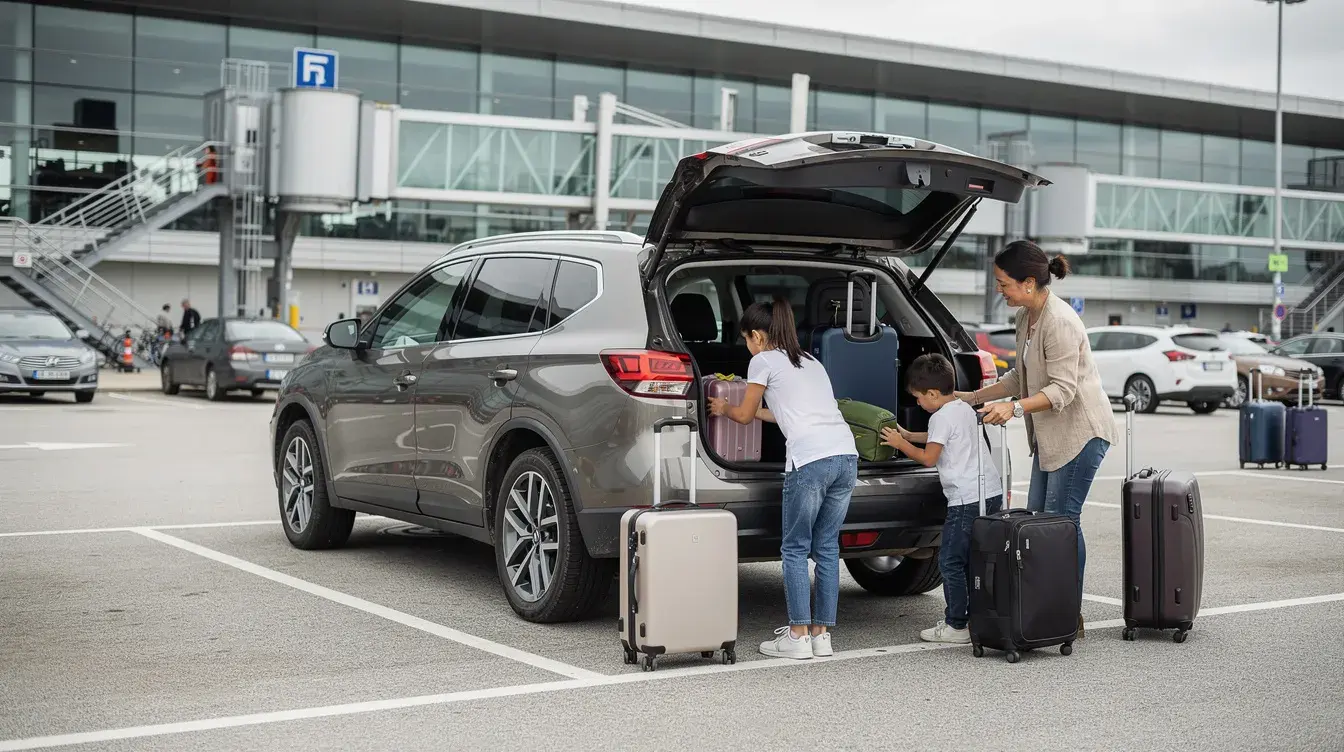
The rental process regarding pricing, insurance, and pick-up locations varies from the traditional rental car process. Here are the main factors to keep in mind.
Costs, Insurance, and Extra Fees
Turo offers rentals for as low as $40 per day for economy cars, though Turo’s rental rates vary widely based on vehicle owners’ pricing. Price is not just the daily rate. Here’s a sample breakdown for a 3-day California Turo trip in a mid-range SUV:
- Base price: $65/day × 3 days = $195
- Trip fee (Turo’s service charge): ~$45
- Standard protection plan: ~$27/day × 3 = $81
- Airport permit fees/delivery fee: $20
- Sales tax: ~$18
- Total: ~$359
Savings depend on the protection plan you pick. Turo often requires users to purchase an independent protection plan for rentals. Plans range from a minimum option (higher out-of-pocket, up to roughly $3,000 in exposure) to a premier option (near-zero deductible but at twice the amount of a basic plan in daily cost). These insurance options can sometimes be more expensive than what you’d pay at a traditional rental counter for comparable coverage.
Watch for additional cost items that appear after the trip: cleaning fees, tolls, mileage overages, smoking fees, and late return fees. Hosts invoice these through the app based on photos, telematics, or toll reports.
One major warning: Turo rentals may not be covered by personal insurance. Many auto policies exclude “commercial use” or peer-to-peer sharing. Likewise, credit card insurance often excludes car-sharing platforms. Call your insurer and your card’s bank advertiser before assuming you’re covered.
Booking on the Turo App, Pick-Up Points, and Additional Drivers
The booking process through the Turo app is similar to booking a hotel: instant book or host approval, calendar availability, and automatic confirmation emails.
Common pickup options include curbside at airports like LAX or SFO, off-airport lots, or neighborhood pickup from the host’s home. Many Turo hosts offer delivery services to your location, but delivery and airport parking lot fees may add to your total. When the host cancels or you face a last-minute change, having a backup plan matters.
To add an additional driver, there’s no extra Turo fee, but the additional driver must be individually approved through Turo before driving the car. Always message the host immediately if your flight is delayed, confirm pickup details the day before, and complete the in-app check-in process before driving away.
Pros and Cons of Turo vs. Traditional Car Rental Companies
Whether you’d recommend Turo to someone else depends on what matters most: price, certainty, vehicle choice, or customer support.
Vehicle Selection
Turo features a wide range of vehicles from economy to luxury. You can browse specialty vehicles, luxury vehicles, EVs, convertibles, and even vintage cars-options you won’t find at a standard rental car agency. Turo allows you to rent unique vehicles not available from traditional agencies, including luxury SUVs and specialty cars. At a traditional rental, you pick a class and get whatever is on the lot.
Price
Turo rentals can be significantly cheaper than traditional services, especially in high-demand periods or popular cities. But extra fees, protection plans, and delivery charges can close the gap or even reverse it. For a basic economy car during off-peak dates, a traditional rental may actually be cheaper once you factor everything in.
Pickup Experience
No counter line with Turo, but also no guaranteed counter if something goes wrong. Traditional rental companies usually have 24-hour airport desks and backup vehicles. Turo’s contactless pickup can be faster and more convenient when it works, but if the host is late or the car isn’t where it’s supposed to be, your recourse whatsoever is limited to app-based support.
Insurance Complexity
Traditional rentals offer standardized insurance option add-ons at the counter. Turo’s protection plans are more complex, and the interaction with your personal insurance and credit card insurance requires more homework.
Reliability
Rental quality varies by individual host. The last person who rented the car may have left it spotless or filthy. A well-maintained vehicle from a highly rated host is a great experience; a poorly maintained car from a new host is not.
Is Turo Reliable? Cancellations, Host Quality, and Disputes
Is Turo legit? Absolutely, it’s a well-established, profitable platform. But the daily experience depends entirely on each individual Turo host.
Before booking, look closely at host ratings, total completed trips, and cancellation history. Hosts can cancel bookings at the last minute, which can leave you scrambling, especially at an airport. Hosts are penalized for last-minute cancellations on Turo (automatic negative reviews and potential account restrictions), but that doesn’t help you find a car at midnight. If a host cancels, Turo may help reassign you, but at potentially higher last-minute prices and with a limited selection.
Some users report a few good experiences followed by frustrating ones. Common complaints include disputed cleaning fees, damage claims based on pre-existing wear, and bad hosts who don’t communicate. If the owner told Turo about damage you didn’t cause, detailed before-and-after photos and in-app messages are your best protection.
Never agree to off-platform payments. If a host asks for cash for mileage overages or airport delivery, report it directly to Turo. The sharing economy relies on platform accountability-bypass it, and you lose your protections.
Can You Cancel a Turo Rental or Change Pickup Time?
General cancellation rules: free cancellation if done far enough in advance, stricter penalties inside 24 hours, and non-refundable or partially refundable rates depending on what was selected at booking. Always check Turo’s current cancellation page before you confirm.
Flight delays and baggage issues happen constantly. Message the host in the Turo app immediately to request a revised pickup time, and keep written proof of everything. Turo may allow adjustments when delays are documented (airline delay notices help), but policies can change. If you’ve used Turo multiple times, you know that flexibility varies by host; some are patient and accommodating, others are not.
What Happens If There’s a Car Accident in a Turo or Rental Car?

If you’ve been injured in a crash involving a Turo vehicle, here’s what you need to know.
An accident in a Turo car is still a motor vehicle accident under California law. Injury claims revolve around negligence, just like any other car crash. The main scenarios we see:
- You’re driving a Turo, and another driver hits you. The at-fault driver’s insurance typically covers your injuries and vehicle damage.
- You’re a passenger in a Turo that crashes. You can bring claims against any at-fault driver.
- A Turo driver hits you as a pedestrian or cyclist. You pursue claims against the at-fault Turo driver and applicable insurance.
- You’re driving your own car and collide with someone in a Turo. Liability follows fault; the Turo driver’s coverage (personal, Turo’s liability, host’s) may apply.
Liability usually follows who was at fault, but insurance coverage can involve several layers: the at-fault driver’s personal insurance, Turo’s liability coverage (which covers bodily injury and property damage to others when a renter is at fault), the host’s policy, and possibly the injured person’s underinsured/uninsured motorist coverage.
Under California Vehicle Code § 17150, car owners are vicariously liable for injuries caused by someone driving their vehicle with permission. For Turo hosts, this means potential legal exposure simply for listing their car. Statutory caps under § 17151 limit that vicarious liability to $15,000 per injured person, $30,000 per accident, and $5,000 for property damage-unless the host was independently negligent (such as negligent entrustment), in which case full liability applies.
If you’re injured in California, you may be entitled to compensation for medical expenses, lost wages, pain and suffering, and, in severe cases, wrongful death damages. This is true regardless of whether the at-fault vehicle was a Turo rental, a traditional rental car, or a privately owned car.
What to do immediately: Call 911 if there are injuries. Get a police report. Exchange information with all drivers. Take photos of all vehicles, the scene, road conditions, and visible injuries. Report the crash in the Turo app. Then contact an experienced car rental accident attorney as soon as possible.
Personal Insurance, Credit Card Insurance, and Turo Protection Plans After a Crash
Many personal auto policies and credit card insurance products were written with traditional rental car companies in mind, not peer-to-peer platforms like Turo. This is where people get surprised.
Your personal insurance may exclude coverage when the vehicle is rented through a car-sharing platform. Some policies have “commercial use” or “peer-to-peer” exclusions that void coverage entirely. For hosts, renting cars on Turo without notifying their insurer can result in a denied claim if an accident occurs.
Most credit card “rental car” coverage, usually secondary coverage, specifically excludes car-sharing or peer-to-peer rentals. Before relying on it for a Turo trip, call your card issuer and ask specifically about peer-to-peer car rental platforms. Get the answer in writing.
Turo’s protection plans are designed for its marketplace but still leave deductibles and gaps. The minimum plan can leave you exposed to thousands in out-of-pocket costs. Even higher-tier plans may only partially cover vehicle damage or carry limited liability limits, depending on the plan chosen.
This insurance confusion can delay or reduce injury compensation. It’s exactly where a California personal injury lawyer can help identify all applicable policies and negotiate with multiple insurers on your behalf.
How Attorney Jeff Car Accident Lawyer Helps After a Turo or Rental Car Crash
Attorney Jeff Car Accident Lawyer is a California-based personal injury law firm representing injured people, not insurance companies, on a contingency fee basis. That means no fee unless the client recovers money.
Our firm regularly handles auto-related cases across California: car accidents, motorcycle crashes, pedestrian and bicycle injuries, Uber/Lyft collisions, wrongful death, and accidents involving rental and Turo vehicles. In a turo-related crash, our team can:
- Investigate fault and obtain police reports
- Request Turo’s internal records and the protection plan details
- Identify all available insurance (Turo liability, at-fault driver’s policy, host’s policy, UM/UIM)
- Calculate full damages, including medical bills, lost wages, and future costs
California has a statute of limitations of generally two years from the date of injury for most personal injury claims. Waiting too long weakens your case. If you’ve been injured in any California car, Uber/Lyft, or Turo accident, schedule a free consultation with Attorney Jeff Car Accident Lawyer to review your situation and options. No upfront costs to you or your family. We strive to recover fair and equitable compensation for our clients.
Get Your Free Case Consultation
Frequently Asked Questions About Turo and Accidents
Does Turo count as a “car rental company” for insurance and credit card coverage?
Turo describes itself as a “peer-to-peer car sharing marketplace,” not a traditional car rental company. Many insurance policies and credit card contracts treat those categories differently. Do not assume that benefits that work with Hertz, Avis, or Enterprise will automatically apply to Turo. Contact your insurer or card issuer directly and confirm in writing. If there is any doubt, consider selecting a stronger Turo protection plan, and talk to a lawyer if you’re later involved in an accident.
What should I do immediately after a crash in a Turo car in California?
Move to safety, call 911 if there are injuries, and request a police report. Exchange information with all drivers and take photos of vehicles, the scene, road conditions, and any visible injuries. Report the incident through the Turo app as soon as possible and notify your own insurance carrier, but do not give recorded statements to other insurers without legal advice. If you’re injured, speak with a California personal injury lawyer quickly, especially before accepting any settlement offers from an insurance company. Our firm offers free consultations for exactly these situations.
Who pays my medical bills if I’m hurt in a Turo accident?
Payment can come from several sources: the at-fault driver’s liability insurance, Turo’s liability coverage, MedPay or personal injury protection on your own policy, your health insurance, or a settlement in a personal injury claim. Until a claim is resolved, many people use their health insurance or pay on a lien basis arranged by their lawyer. Out-of-pocket bills may be reimbursed through a settlement or verdict. Every case is fact-specific, and an attorney can help prioritize which policies to pursue first.
Can I get compensation if I was a passenger in a Turo or rental car?
Passengers injured in California car accidents-whether in a Turo vehicle, Uber/Lyft, or a traditional rental-usually can bring claims against any negligent driver who caused the crash. Passengers’ rights are generally strong because they were not the ones driving. Liability typically falls on one or more at-fault drivers and their insurers. If you were a passenger, gather driver and insurance information from everyone involved and contact a personal injury attorney to evaluate your potential claims.
What if I’m hit by a Turo car while walking or biking?
Pedestrians and cyclists struck by a Turo driver can pursue claims just as they would if the other driver were in a personal or traditional rental car. The key questions are who was at fault and what insurance applies-the driver’s personal policy, Turo’s coverage, and possibly the victim’s UM/UIM coverage.
These cases can be complex, and injured pedestrians or cyclists should speak with a California personal injury lawyer as soon as possible after receiving emergency medical care. At Attorney Jeff Car Accident Lawyer, we handle these cases on a contingency basis-you pay nothing unless we recover money for you.

Written By
Michelle Jaco
A content strategist and copywriter based in Orange County, she possesses over ten years of professional writing experience. A graduate of San Diego State University with a B.A. in English, she specializes in building brand identity and enhancing reader engagement, with expertise spanning legal content, software startup copy, and lifestyle branding. When she is not writing in her favorite coffee shop, Michelle is typically traveling, running along the beach, and indulging her sports fandom by cheering on the Kansas City Chiefs and Los Angeles Dodgers (she maintains that she is not a bandwagoner).