

 888-970-5729
 1300+
1300+- A Scam Built on a Fake Digital Identity
- How AI Search Helped the Lie Spread
- Red Flags That Applied in the Daejon Love Case
- Spotting AI-Generated Images and AI-Generated Content More Broadly
- 7 Ways to Screen for the Right Lawyer for Your Case
- The Takeaway: How to Spot AI-Generated Content So You Can Make the Best Decision for Your Case
A romance scam involving a man who posed as a San Francisco 49ers player made recent headlines as he scammed dozens of women out of more than $1.3 million.
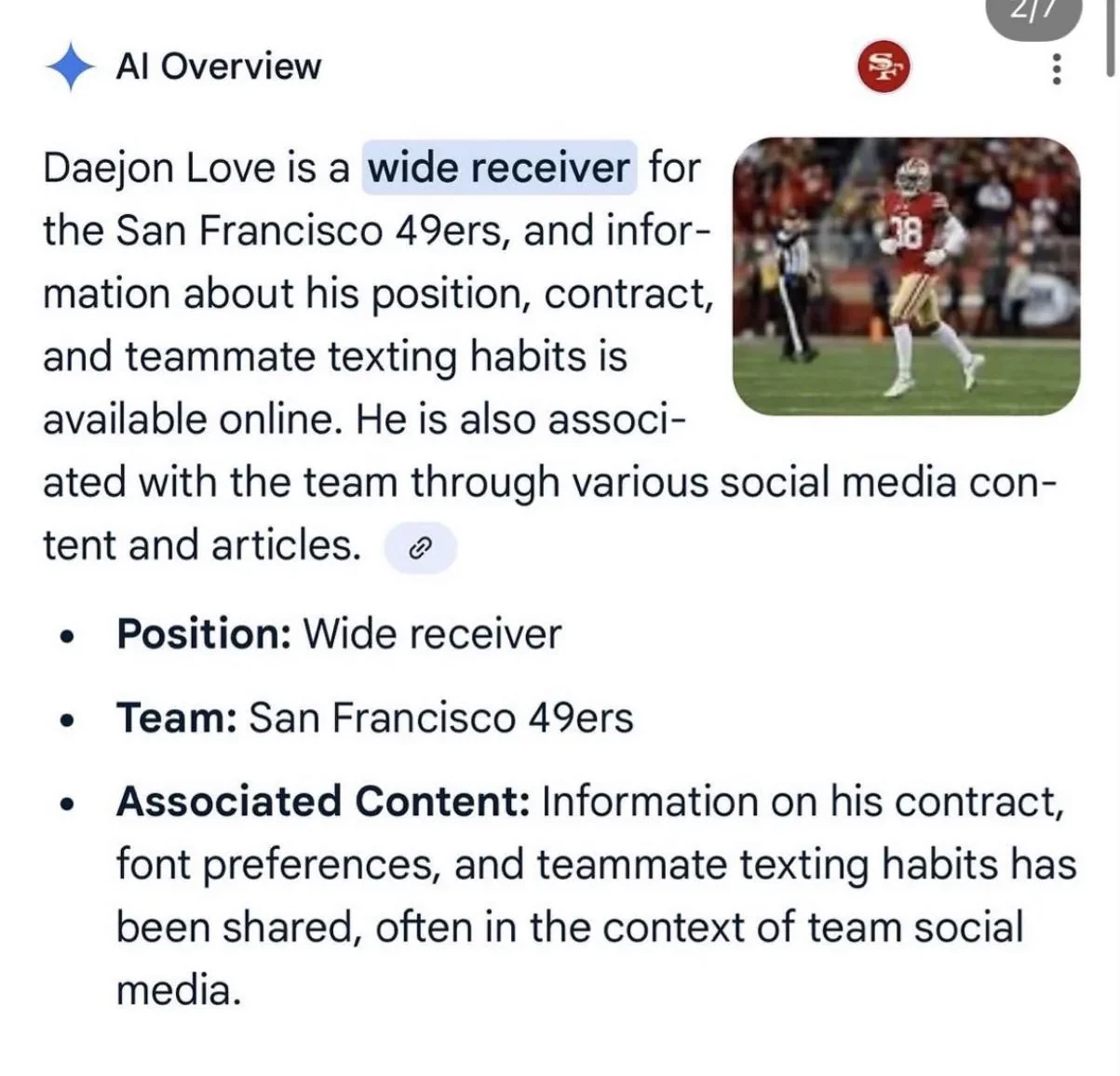
While online fraud is far from a new concept, what makes this case particularly alarming is how AI-powered search results on search engines, like Google, actually reinforced the scammer’s false identity, treating a manufactured online presence as fact.
As more people turn to AI tools to research businesses and professionals before hiring them, including personal injury attorneys and other legal services providers, it is worth understanding how to spot AI-generated content and how to tell a real track record from a well-constructed illusion.
Discover key insights from the Daejon Love scam on how artificial intelligence can be misled by engineered online personas. Additionally, learn how to spot AI-generated red flags and effectively vet a personal injury lawyer before trusting them with your case.
A Scam Built on a Fake Digital Identity
This case stands out beyond typical romance scams because AI search engines mistook Love’s fabricated online presence for reality, validating his fake NFL persona with various professional football teams, including the San Francisco 49ers and Los Angeles Rams.
In August 2026, federal prosecutors in Oregon charged two men, Daejon Labrayae Love, 35, and Taylor Chan, 18, with conspiracy to commit both wire fraud and wire fraud.
Love met victims on dating apps, posing as a wealthy San Francisco 49ers player or real estate investor. To project wealth and status, he posted training videos, wore team gear, and crafted a polished social media presence.
Chan posed as Love’s financial advisor, using three-way FaceTime calls and fake financial screenshots to trick victims into believing their investments were growing. Love cut contact and kept the funds whenever victims questioned the scheme or ran out of money.
According to the U.S. Attorney’s Office for the District of Oregon, the pair defrauded at least 26 women out of more than $1.3 million between 2022 and their arrest in August 2026.
How AI Search Helped the Lie Spread
Love did not just lie to individual victims. He built a coordinated online footprint designed to be picked up by search engines and AI tools. He purchased followers and engagement from services like Useviral.com and Buzzoid to inflate his apparent popularity.
Additionally, he tagged official accounts, posted consistent content across platforms, and let algorithmic systems do the rest.
Industry experts who reviewed the case pointed to a specific vulnerability. AI-driven search tools are built to detect consistency across sources, not to verify truth.
Therefore, when enough social media profiles, videos, and tagged posts tell the same story, these systems can treat that repetition as a signal of legitimacy rather than recognizing it as a manufactured pattern.
How Such AI-Generated Content Affects the Everyday Consumer
This matters because more people are now starting their searches for professionals, whether for medical providers, financial advisors, or legal representation, directly with AI tools instead of traditional search engines.
Industry research found that a meaningful share of consumers already begin their search for an attorney or legal advice with an AI chatbot rather than a search engine.
If a confident-sounding AI answer can be manipulated by a fabricated NFL career, the same methods could theoretically inflate a professional’s credentials in any industry, including personal injury law.
Red Flags That Applied in the Daejon Love Case
Several warning signs stood out once investigators reconstructed the scheme. These red flags are worth keeping in mind any time you are evaluating someone’s credentials online, whether it is a potential partner, a financial advisor, or a law firm you are considering hiring.
1. A lifestyle or service that outpaces the evidence.
Love displayed luxury without any independent, verifiable source confirming his claimed career or wealth. Similarly, any business claiming to provide award-winning services, while failing to provide real-life client testimonials or verifiable evidence from credible sources, such as the Better Business Bureau (BBB), should be questioned.
2. Inflated or purchased social media engagement.
Social media follower counts and video views that seem disproportionate to someone’s actual public profile can be manufactured rather than earned. This is a common tactic exhibited by many businesses.
3. Claims that go unchecked against the actual source.
No one verified Love’s roster status against the 49ers’ official team page before AI tools began repeating the claim as fact. When seeking legal representation, always check an attorney’s status on the official state bar website, where they should be licensed, such as the State Bar of California.
4. Urgency and isolation tactics.
Victims were encouraged to act quickly, send money fast, and, in some cases, take out personal loans, a pattern common to many fraud schemes. You should never feel rushed to sign a contract or enter into any agreement before you are ready to confidently do so.
5. A refusal to answer direct questions.
Once victims pushed for details, Love disappeared. A legitimate attorney does not vanish when asked reasonable questions about fees, case history, or how a case will actually proceed through court.
Spotting AI-Generated Images and AI-Generated Content More Broadly
Beyond the Daejon Love case, it is worth understanding how to identify AI-generated content in general, since the same techniques can show up in reviews, testimonials, or marketing content from any professional service, legal or otherwise.
This quick-check guide has become a basic form of due diligence, not an advanced skill reserved for technology experts.
Focus on Patterns and Odd Phrasing in AI-Generated Content
Watch for text that feels generic, repetitive, or oddly detached from context. AI-generated content sometimes leans on buzzwords to compensate for a lack of real-life specificity, and it can produce citations or credentials that sound authoritative but do not hold up to a fact-check.
Examine Suspected AI Images Closely
Detecting AI-created images takes a slightly different eye than detecting it in written content. At first glance, a high-quality AI-generated image can look convincing, but AI tools still struggle to render certain details accurately.
For example, key details to look out for include:
- Facial expressions, which can appear slightly frozen or mismatched to the supposed emotion
- Details in the hands for extra fingers, missing fingers, or oddly bent joints
- Unrealistic lighting that does not match the rest of the scene, since AI struggles with shadows and reflections tied to real-world events and real physical spaces
Examine an Image’s Metadata
With millions of AI images that appear realistic circulating online, it can be difficult to tell the difference between real images and artificial representations. A reverse image search will often show whether a real photo actually originates from where it claims to, or whether it has been lifted, altered, or generated. This reveals insights like date, location, camera settings, and copyright details.
If accessing a potential AI-generated image on a computer, right-click the image and select “Properties” to view metadata. To do this on a smartphone, image details can be accessed through the phone’s menu options or by using apps like Google Photos.
A reverse image search is another valuable method for spotting AI-generated images. PBS Learning Media’s video guide shows you how to effectively use this technique.
7 Ways to Screen for the Right Lawyer for Your Case
The Daejon Love case is a reminder that appearances, especially online ones, can be engineered. Choosing the right lawyer deserves the same level of scrutiny, whether filing a car accident claim, personal injury lawsuit, or workers’ comp claim.
The best way to narrow down the most fitting match is to apply the following steps.
1. Verify bar admission directly.
Every state bar association maintains a public attorney lookup tool. Confirm that the attorney is licensed, in good standing, and authorized to practice in your state before scheduling a consultation.
2. Check for disciplinary history.
State bar websites also list any past disciplinary actions or complaints. A clean record is a meaningful signal of professional conduct.
3. Look past star ratings to the substance of reviews.
Read a range of reviews across multiple platforms, such as Yelp, Avvo, or Google reviews, not just the ones featured on the firm’s own website, and pay attention to specifics about communication, case outcomes, and responsiveness.
4. Confirm case results through primary sources where possible.
Verdict and settlement amounts should be something the attorney can speak to in detail, not just a number on a webpage. Attorneys with a proven track record will welcome the opportunity to discuss their case results in detail.
5. Ask about experience with your specific type of case.
Personal injury law covers a wide range of situations, from car accidents to premises liability. Ask directly which practice areas they specialize in, how many similar cases the attorney has handled, how they typically work with insurance companies, and what to expect from the first court appearance through resolution.
6. Understand how fees actually work.
Ask whether the firm charges an hourly rate, works on contingency, or offers reduced rates or free representation for an initial case review. A clear, written fee agreement protects both sides and should be explained in plain language before you sign anything.
7. Get a second opinion if something feels off.
It is reasonable to consult with other attorneys before committing, especially if the answers you are getting do not add up.
Trust confirmed credentials over social proof. Follower counts, flashy video content, and glowing testimonials can all be manufactured. A verified bar license and a documented case history cannot.
The Takeaway: How to Spot AI-Generated Content So You Can Make the Best Decision for Your Case
Online research is a useful starting point when you are choosing a personal injury attorney, but it should never be the final word.
AI-generated summaries and search results can be manipulated by the same tactics that built Daejon Love’s fake identity: consistency across manufactured sources, purchased engagement, and unverified claims.
If you were injured in an accident and are searching for the right attorney to represent you, take the extra steps to verify their online identity. Additionally, verify credentials directly with your state bar, ask specific questions during a consultation, and choose a firm that welcomes scrutiny rather than avoiding it.
Contact our law offices at Attorney Jeff today to schedule a free, no-obligation consultation with a personal injury attorney whose credentials you can verify for yourself. Don’t worry; Jeff’s got you.

Written By
Michelle Jaco
A content strategist and copywriter based in Orange County, she possesses over ten years of professional writing experience. A graduate of San Diego State University with a B.A. in English, she specializes in building brand identity and enhancing reader engagement, with expertise spanning legal content, software startup copy, and lifestyle branding. When she is not writing in her favorite coffee shop, Michelle is typically traveling, running along the beach, and indulging her sports fandom by cheering on the Kansas City Chiefs and Los Angeles Dodgers (she maintains that she is not a bandwagoner).