

 888-970-5729
 1300+
1300+















Our Texas slip-and-fall lawyers at Attorney Jeff represent injured victims after a fall caused by a property owner’s negligence. A slip and fall may seem minor at first, but these accidents frequently cause broken bones, various head injuries, and long-term disability, especially for older adults.
If you were hurt because a property owner failed to fix or warn about a dangerous condition, our experienced Dallas slip-and-fall lawyers can help you pursue full and fair compensation. Contact our Texas law offices today for a free case evaluation, so our legal team can begin building your premises liability claim.
Table of Contents
Types of Slip-and-Fall Cases Our Texas Personal Injury Lawyers Handle
Do I Need to Hire a Texas Slip-and-Fall Lawyer
Texas Premises Liability Laws That Will Affect Your Claim
How Long Do I Have to File a Slip-and-Fall Lawsuit in Texas?
Where Do Most Texas Slip-and-Fall Accidents Happen?
Damages Slip-and-Fall Victims Can Recover in Texas
Who Can Be Liable in a Texas Slip-and-Fall Accident?
Key Statistics: Slip and Fall Accidents in Texas
Dallas slip-and-fall accidents are far more serious than most people realize. According to the National Floor Safety Institute (NFSI), falls send more than 8 million people to the emergency room every year, accounting for close to 12% of all ER visits nationwide. Key statistics include:
- Falls caused 43,020 deaths among adults 65 and older in recent years and have risen 51% over the past decade in recent years, according to the National Safety Council.
- Serious falls lead to nearly half of TBI-related hospitalizations across all age groups,
- Slips, trips, and falls led to 450,540 non-fatal workplace injuries and 865 workplace deaths in a single recent year, according to a review of Bureau of Labor Statistics data
- Walking surfaces contribute to 55% of all slip, trip, and fall accidents, per NFSI research
Uneven pavement, wet floors, poor lighting, and neglected repairs are common threads running through the vast majority of these accidents. Regardless of where the accident occurred, if you suffered a serious slip-and-fall injury on someone else’s property, contact our experienced Dallas slip-and-fall attorneys today.
They will help you understand your legal options and pursue the compensation you deserve.
Types of Slip-and-Fall Cases Our Texas Personal Injury Lawyers Handle
Many slip-and-fall cases involve a wide range of hazardous conditions caused by a property owner’s negligence. At Attorney Jeff Car Accident Lawyer, our experienced slip-and-fall accident lawyers handle the following:
- Wet or Freshly Mopped Floors: Spills, leaks, or cleaning that leave a slick surface without warning signs
- Uneven Walkways and Broken Sidewalks: Cracked pavement, potholes, or unmarked changes in elevation
- Poor Lighting: Dim stairwells, parking lots, or hallways that hide hazards from view
- Loose Flooring or Carpeting: Bunched rugs, torn carpet, or unsecured mats that cause a trip
- Cluttered Walkways: Boxes, cords, or merchandise left in aisles and pathways
- Defective Handrails and Stairs: Broken or missing railings, uneven steps, or worn stair treads
- Ice and Weather-Related Hazards: Freezing rain or standing water left untreated near entrances
- Inadequate Maintenance: Long-neglected repairs to floors, parking structures, or common areas
Property owners and their insurance companies often argue that a hazard was open and obvious, or that the injured victim was not paying attention, even when the fall was truly caused by someone else’s negligence. Consult with our award-winning law firm to protect your slip-and-fall case. No upfront costs to you or your family. We strive to recover fair and equitable compensation for our clients.
Get Your Free Case Consultation
Why Choose Our Dallas Slip-and-Fall Injury Lawyers
Hiring a slip-and-fall attorney is not always necessary.
With serious injuries sustained, choosing the right premises liability attorney to ensure fair case proceedings is crucial. Every injured party must select a legal team that understands both Texas law and the tactics insurance companies use to minimize payouts.
At Attorney Jeff, our core strengths that result in maximum compensation for clients include:
- Proven track record: Our experienced slip-and-fall lawyers have a proven track record of representing injured victims throughout Texas.
- Direct legal representation: You will work directly with your Dallas slip-and-fall attorney throughout the entire legal process.
- Willing to go to trial: Our trial lawyers prepare every personal injury lawsuit as if it is headed to court, which strengthens our position against opposing counsel during negotiations.
- Thorough investigations: We work to document dangerous conditions before evidence disappears or gets repaired.
- Serving all of Texas: Our Dallas slip-and-fall attorneys serve clients throughout Dallas and North Texas.
Our law firm operates on a contingency fee basis, so no upfront costs to you or your family. We strive to recover adequate compensation for our clients and their families.
What Injuries Can Be Compensated After a Slip and Fall Accident?
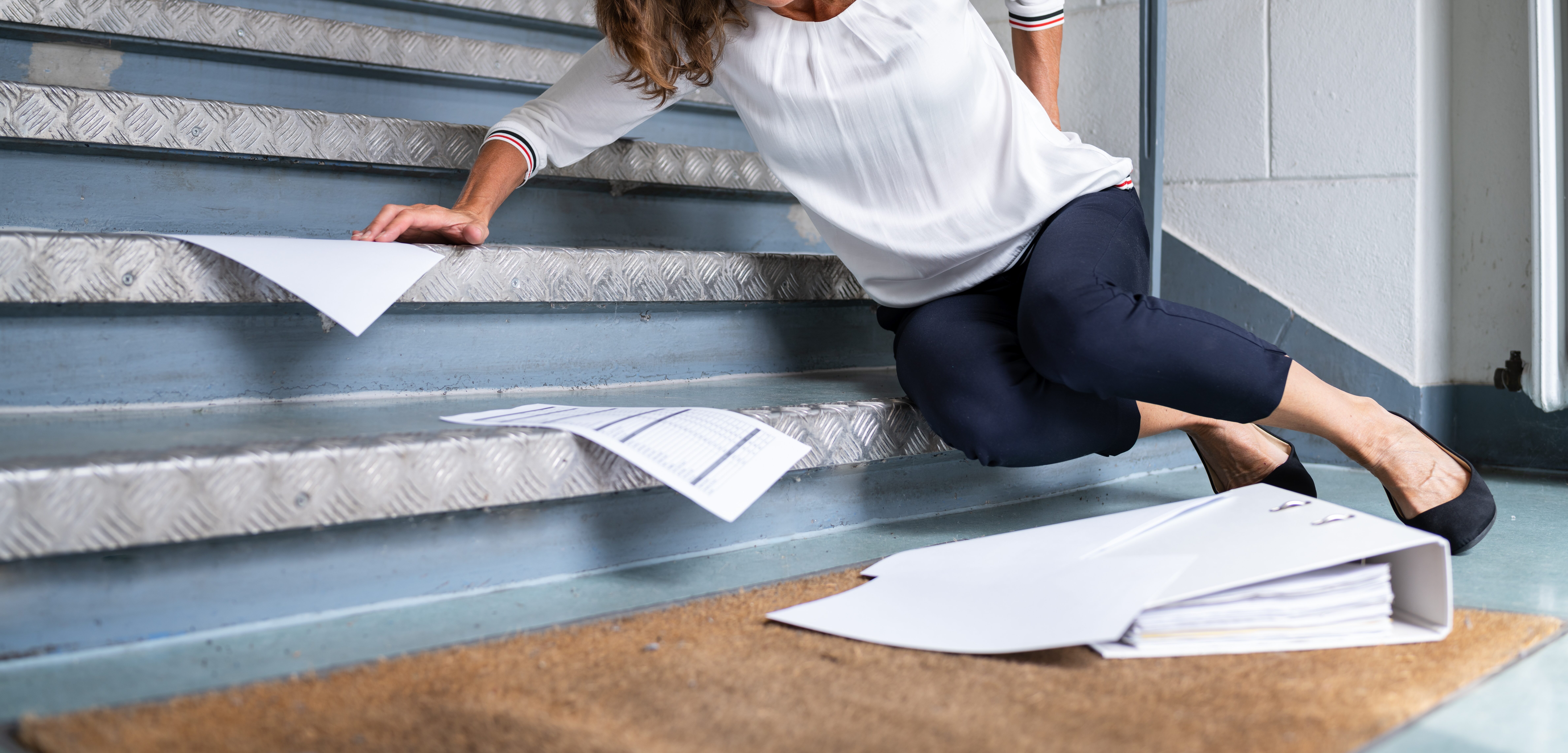
A slip-and-fall can cause a broad range of injuries, and the severity often depends on the victim’s age, the height of the fall, and the surface involved. Common slip-and-fall injuries that qualify for compensation include, but are not limited to:
- Traumatic Brain Injury (TBI): Falls are the leading cause of TBIs across all age groups
- Hip Fractures: Especially common and dangerous among older adults, often requiring surgery
- Spinal Cord Injuries: May result in partial or complete paralysis
- Broken Bones: Wrists, arms, ankles, and hips are frequently fractured when a person tries to break their fall
- Herniated Discs and Back Injuries: May cause chronic pain and require ongoing treatment
- Knee and Shoulder Injuries: Torn ligaments or rotator cuff damage from the impact
- Cuts, Bruises, and Soft Tissue Damage: Can still require significant medical treatment
- Wrongful Death: Falls remain one of the leading causes of injury death among older adults
If you suffered any of these injuries in a fall, it is important to seek medical attention immediately and consult with an experienced slip and fall lawyer to discuss your legal options for recovering compensation for your medical expenses.
Texas Premises Liability Laws That Will Affect Your Claim
Texas has its own set of premises liability laws that shape how personal injury claims involving slip-and-fall injuries are handled. Understanding these rules is critical to protecting your right to recover compensation, since your legal status on the property directly affects the duty the owner owed you.
The Open and Obvious Doctrine
When someone suffers a serious injury on someone else’s property, Texas courts evaluate if a hazard was open and obvious, or in other words, noticeable and avoidable to a reasonable person. However, an obvious hazard does not automatically discredit a claim from being filed. Exceptions exist when an injured person could not reasonably avoid the danger.
Modified Comparative Fault
Texas uses a modified comparative fault rule, also referred to as proportionate responsibility. This means that victims who are 50% or less at fault receive compensation reduced by their percentage of fault, while those 51% or more at fault cannot recover anything. For instance, a victim awarded $100,000 who is 20% at fault receives $80,000.
Because insurers frequently blame victims (e.g., claiming distraction, bad shoes, or ignoring warning signage), proving the property owner’s fault is crucial.
Slip and Falls on Government Property
Unlike private premises liability claims, falls in government buildings, such as public libraries or courthouses, are governed by the Texas Tort Claims Act, which limits government liability. Key differences include:
- Actual Knowledge Requirement: Government entities must usually have actual, rather than constructive, knowledge of the hazard.
- Shortened Notice Deadlines: Written notice is typically required within six months, though some municipalities mandate notice in 45 to 90 days.
- Damage Caps: City claims are generally capped at $250,000 per person and $500,000 per occurrence for injury or death.
Landowner Liability for Recreational Land
Texas limits liability for landowners who open their property for recreational activities such as hiking, camping, hunting, or fishing. Under this statute, a landowner generally owes no duty of care beyond refraining from willful, wanton, or grossly negligent conduct toward those using the land for recreational purposes.
Punitive Damages in Slip and Fall Cases
Texas allows exemplary, or punitive, damages in cases involving fraud, malice, or gross negligence, though such damages are rare in typical Dallas slip-and-fall cases. When available, exemplary damages are generally capped at the greater of $200,000 or two times the sum of economic and non-economic damages, up to $750,000.
Who Is Considered a “Visitor”
Texas law categorizes visitors into three categories, each owed a distinct duty of care by property owners legally:
- Invitees: Those entering for business or mutual benefit (e.g., store customers) are owed the highest duty of care. Property owners responsible for routinely inspecting premises, repairing known hazards, and warning of hidden dangers are generally liable for resulting injuries when neglecting their duty of care.
- Licensees: Entering with permission for personal reasons (e.g., social guests), licensees must be warned of known hazards, though property owners are not required to inspect for hidden dangers.
- Trespassers: Entering without permission, trespassers are owed the lowest duty of care, with owners only required to refrain from intentional harm or gross negligence.
Because most commercial slip-and-fall claims involve invitees, property owners are typically held to the highest legal standard for maintaining safety.
Actual and Constructive Knowledge
Under Texas law, recovering compensation as an invitee requires proving the property owner knew of the dangerous condition, meaning they knew about the hazard or should have discovered it through reasonable inspection.
As this is often the most contested issue in a slip-and-fall case, surveillance footage, maintenance logs, and employee testimony are routinely used to prove how long the hazard remained unaddressed.
How Long Do I Have to File a Slip-and-Fall Lawsuit in Texas?

Under the Texas statute of limitations, injured victims generally have a time limit of two years from the date of the injury to file a personal injury lawsuit. A wrongful death lawsuit carries the same two-year deadline.
Exceptions to the Filing Deadline
- The discovery rule may extend the deadline if an injury was not immediately apparent after the fall.
- Claims against government entities, such as a fall in a public building or on a defective sidewalk, require formal written notice, sometimes within as little as 6 months.
- Minors and certain other individuals may have modified timelines under Texas law.
What Happens if I Miss the Deadline?
If a slip-and-fall lawsuit is not filed within the statute of limitations, the right to seek compensation is forfeited, and courts will likely dismiss the case. Consulting with an experienced slip-and-fall law firm early ensures the legal time limit to file is not missed.
Where Do Most Texas Slip-and-Fall Accidents Happen?
Slip-and-fall accidents can occur almost anywhere, but certain locations pose a heightened risk due to foot traffic, flooring, or maintenance practices. Common locations for Texas slip-and-fall claims include:
- Grocery Stores and Retail Shops: Spilled liquids, wet entryways, and cluttered aisles
- Restaurants and Bars: Grease, water near sinks or ice machines, and uneven flooring transitions
- Apartment Complexes and Rental Properties: Broken stairs, poor lighting, and neglected common areas
- Parking Lots and Garages: Potholes, cracked pavement, and inadequate lighting create
- Office Buildings and Workplaces: Loose carpeting, cluttered walkways, and wet floors after cleaning
- Government Buildings and Sidewalks: Public libraries, courthouses, and municipal sidewalks
- Hotels and Entertainment Venues: Pool decks, lobbies, stairwells, and other heavy foot traffic areas that require frequent maintenance
- Construction Sites: Debris, uneven surfaces, and temporary walkways
Regardless of where a fall occurs, the property owner or manager in control of that space generally has a legal obligation to maintain reasonably safe conditions for lawful visitors.
Damages Slip-and-Fall Victims Can Recover in Texas
Economic damages, such as medical bills, and non-economic damages, such as “pain and suffering,” may be compensated in a successful slip-and-fall claim.
A successful slip and fall claim should hold the negligent property owner accountable and provide the injured party with adequate compensation for their losses. A fair settlement typically reflects the following categories of compensatory damages.
Economic Damages
- Current and future medical expenses and medical records
- Lost wages and lost income from diminished earning capacity, including cases where a victim cannot return to their previous job
- Rehabilitation and physical therapy costs
- Out-of-pocket costs related to long-term care or in-home assistance
Non-Economic Damages
- Physical pain and suffering
- Emotional distress and mental anguish
- Disfigurement, scarring, and permanent disability
- Loss of consortium
Punitive Damages
These losses may be awarded in cases involving gross negligence or intentional misconduct, such as a property owner knowingly ignoring a repeated hazard. Such damages are rare and are subject to strict statutory caps under Texas law.
Texas law places specific limits on punitive damages, so it is important to speak with a personal injury attorney about how these caps may apply to your case.
How to Prove Negligence in a Texas Slip and Fall Case
Recovering compensation requires proving the property owner’s negligence and establishing that the property owner is legally responsible for the hazard that caused the fall. Personal injury lawyers generally do this by demonstrating four elements of a premises liability claim:
- Duty of Care: The property owner owed the injured party a duty based on their legal status as an invitee, licensee, or trespasser.
- Breach of Duty: The property owner failed to meet that duty, such as by ignoring a known hazard or failing to conduct reasonable inspections.
- Causation: The breach of duty directly caused the fall that resulted in the victim’s injuries.
- Damages: The fall resulted in quantifiable losses, such as medical costs, lost wages, or physical pain and suffering.
Because property owners often argue that a hazard was not present long enough to discover, slip and fall attorneys frequently rely on maintenance records, incident reports, and surveillance footage to establish exactly how long a dangerous condition existed before the fall occurred.
Who Can Be Liable in a Texas Slip-and-Fall Accident?
Determining all at-fault parties is often complex, especially when multiple parties may share a property owner’s responsibility for maintaining safe conditions. Common individuals and entities who may be held liable include:
- Property Owners: Individuals or companies who own the premises where the fall occurred
- Property Management Companies: Businesses hired to maintain and inspect a property
- Business Tenants: Retailers, restaurants, or other tenants who control the specific area where a hazard existed
- Government Entities: Cities, counties, or school districts responsible for maintaining public property
- Maintenance and Cleaning Contractors: Third parties hired to clean or repair a property
- Homeowners Associations: Entities responsible for maintaining common areas in a residential community
In some cases, multiple parties may share liability, making it important to work with an attorney who can conduct a thorough investigation to identify every at-fault party.
Frequently Asked Questions About Texas Slip and Fall Claims
How long do I have to file a slip-and-fall lawsuit in Texas?
In most cases, Texas law grants two years from the date of the fall to file a claim. Claims against government entities require much earlier written notice, so it is best to speak with a Texas slip-and-fall attorney as soon as possible.
Can I still recover compensation if the hazard was obvious?
Yes, in some circumstances. Texas courts consider whether a hazard was open and obvious, but this does not automatically bar recovery, particularly when the injured person had no reasonable way to avoid the danger.
What if I was partly at fault for my fall?
Under Texas’s modified comparative fault rule, you can still recover compensation as long as you are found 50% or less at fault. Your compensation will be reduced by your percentage of responsibility.
Do I Need to Hire a Slip and Fall Accident Lawyer?
No. However, hiring an experienced slip-and-fall lawyer is not always required, but pursuing a claim without one can be especially difficult, given the tactics many insurance companies use to minimize payouts.
What if I fell in a government building?
Claims involving government property follow the Texas Tort Claims Act, which requires proof of actual knowledge of the hazard and much shorter notice deadlines than a typical premises liability claim. An attorney can help identify the correct notice requirements for your situation.
How Our Texas Legal Team Will Benefit Your Case
Our award-winning legal team handles the demands of your personal injury case so you can focus on recovery. Our services include:
- Thorough Accident Investigation: In-depth review of the hazardous condition and contributing factors
- Evidence Collection and Preservation: Securing surveillance footage, maintenance records, and witness statements
- Countering Victim Blame: Building a case that pushes back against unfair assumptions about how the fall occurred
- Damage Assessment: Evaluating medical bills, lost wages, and pain and suffering
- Insurance Negotiation: Aggressively pursuing fair compensation with insurance companies
- Court Representation: Litigating your personal injury lawsuit if maximum compensation cannot be reached
Schedule a Free Case Evaluation with Our Law Offices Today
Immediate action is crucial after a slip and fall accident, both for your health and your personal injury claim’s validity. Evidence disappears, witnesses forget key details, and filing deadlines do not typically pause, especially when a government entity is involved.
Contact us and schedule a free consultation today to learn how our Dallas slip-and-fall attorneys can support you through this challenging time. You don’t have to handle the complicated legal proceedings or deal with the pushy insurance adjusters of the property owner’s insurance company alone; Jeff’s got you.
Other Practice Areas Our Texas Personal Injury Law Firm Specializes In
- Texas Bicycle Accidents
- Texas Car Accidents
- Texas Dog Bite Cases
- Texas Motorcycle Accidents
- Texas Pedestrian Accidents
- Texas Personal Injury Accidents
- Texas Truck Accidents
- Texas Uber Accident Lawyer
- Texas Workers’ Compensation Cases
- Texas Wrongful Death Lawsuits
Attorney Jeff’s Other Locations
If you sustain injuries after a slip-and-fall accident, speak with our experienced personal injury attorneys today for a free case evaluation. We also have locations throughout California and Arizona.
- Bakersfield
- Corona
- Fontana
- Fresno
- Hesperia
- Monterey Park
- Phoenix
- Rancho Cucamonga
- San Jose
- Santa Ana
- Tustin
- Van Nuys
- Victorville
- Visalia

About the Author
JEFFREY FAYNGOR, ESQ.
Jeffrey Fayngor is the founder of Attorney Jeff Car Accident Lawyer and an experienced personal injury attorney dedicated to representing accident victims. He earned his J.D. from Whittier College School of Law and has recovered over $120 million for injured clients. He has built his practice around helping injury victims protect their rights and pursue the compensation they deserve.