

 888-970-5729
 1300+
1300+- What Is “Duty of Care” in a Negligence Case?
- The 4 Elements of Negligence
- How Duty of Care Developed Into a Legal Requirement
- Common Examples of General Duty in California Injury Cases
- How California Courts Decide if Care Responsibilities Exist
- When Is a Duty of Care Considered “Breached?”
- Duty of Care Across Common California Personal Injury Claims
- How Proving Duty of Care Exists Affects a Case
- How a Personal Injury Law Firm Helps Prove Duty of Care
- Conducting Risk Assessments Through a Free Consultation
If you’ve been injured in an accident that wasn’t your fault, understanding how California personal injury law works is the first step toward getting fair compensation. At the heart of every negligence claim is a concept called “duty of care”—and proving it can make or break your case.
What Is “Duty of Care” in a Negligence Case?
Duty of care is the first of four elements in proving another party’s “negligence” in a California personal injury claim. All four elements must be established in order for a personal injury case to move forward.
This duty of care framework is the legal obligation a defendant owes to prevent harm. This care duty can apply to everyday situations requiring adherence to perform any of the following actions in a safe manner, such as:
- Driving on the freeway
- Drying wet surfaces in a retail store
- Providing medical care
- Restraining an aggressive pet
- Producing a properly functioning product
In California, this concept of care obligations comes from both common law traditions and California Civil Code §1714(a). That statute makes it clear that everyone is responsible for any harm caused by their failure to exercise ordinary care and skill in managing their property or person. This isn’t just legal theory; it’s the foundation for how courts evaluate whether someone should be held accountable.
The 4 Elements of Negligence
To prove negligence and recover compensatory damages in California, an injured party must typically prove the following elements:
- Duty of Care: The legal obligation to act in a reasonable manner
- Breach of Duty: Failing to meet the required standard of care
- Causation: Linking the breach to the injury-causing accident
- Damages: Resulting losses, such as medical bills or pain and suffering
Duty of care is the first element of this analysis, and it can sometimes be difficult to clearly demonstrate. However, an experienced personal injury attorney can help prove the elements of negligence and clearly present them to insurance adjusters, mediators, and juries.
How Duty of Care Developed Into a Legal Requirement
The concept of duty of care evolved over more than a century through landmark case decisions that gradually expanded legal protections for injured people.
Early tort law required something called “privity,” a direct contractual relationship between parties, before any legal duty could exist. This meant that if consumers bought defective products from a retailer and were injured by a design flaw, there was often no legal liability on the retailer’s part, because they had no direct contract with the injured parties. Other important court cases include:
- MacPherson v. Buick Motor Co. in 1916: This transformed American product liability law by holding that manufacturers owe a duty directly to consumers, regardless of privity, when defects could foreseeably cause injury.
- Donoghue v. Stevenson in 1932: This became the most influential decision in this area. Lord Atkin articulated the “neighbor principle” to take reasonable care to avoid acts or omissions that would foreseeably harm your “neighbors.” This shifted the focus from formal relationships to foreseeability and proximity.
Modern U.S. and California courts apply similar reasoning. If harm is reasonably foreseeable and there’s a sufficient connection between the parties, a duty generally exists. However, courts also use multi-factor test frameworks to avoid creating limitless liability in every situation.
Common Examples of General Duty in California Injury Cases

Understanding the duty of care becomes much easier when you see how it applies to real situations. Here are common scenarios California residents face every day.
Car Drivers
All car drivers owe a general duty to other motorists, pedestrians, cyclists, and other road users. This means obeying California traffic laws, such as following speed limits, stopping at red lights, avoiding driving under the influence, and operating vehicles as a reasonable person would under similar conditions.
For example, a texting driver who rear-ends a stopped vehicle has breached the care duty because a reasonably careful driver would not have been engaged in using their phone while driving.
Motorcyclists and Bicyclists
Motorcycle and bicycle riders also have care obligations to operate their bikes cautiously. Therefore, they must also follow traffic laws, use reasonable lane positioning, signal their intentions, and maintain a proper lookout for vehicles and pedestrians.
For example, if a motorcyclist weaves recklessly through traffic and causes a collision, the rider has failed to meet the standard of care expected of them.
Property Owners and Occupiers
California property owners have a duty to maintain a safe environment for visitors and patrons. A grocery store or retailer must use reasonable care to inspect for hazards, fix them promptly, or warn customers about dangers.
For example, if a store repeatedly ignores a liquid spill while employees walk past, the company has breached its duty to shoppers who might slip and fall.
Dog Owners
Pet owners in California must control and restrain their dogs, particularly in public places or around guests. California also imposes strict liability for dog bites under Civil Code §3342.
This means that if a dog bites someone in a public space or on private property without trespassing, the resulting liability will fall on the dog owner, regardless of whether the dog has shown aggression or bitten someone before.
Uber/Lyft and Rideshare Drivers
When a rideshare driver logs into the app and accepts rides, that driver owes a duty to passengers, pedestrians, and other motorists to drive safely. They must follow both company safety protocols and California traffic laws.
The layered insurance coverage that applies during different “periods” of the interaction (app on but no passenger, passenger in car, etc.) can make filing Lyft and Uber accident claims more complex, involving multiple liable parties.
Employers’ Duty and Job Sites
California employers have a duty to protect employees by providing a reasonably safe working environment, proper training, and appropriate equipment. This employer’s duty relates to workers’ compensation claims, in which benefits flow regardless of fault.
Medical Professionals
Healthcare professional standards require California doctors, nurses, and hospitals to provide the level of skill and care that reasonably competent medical professionals in the same specialty and community would use.
How California Courts Decide if Care Responsibilities Exist
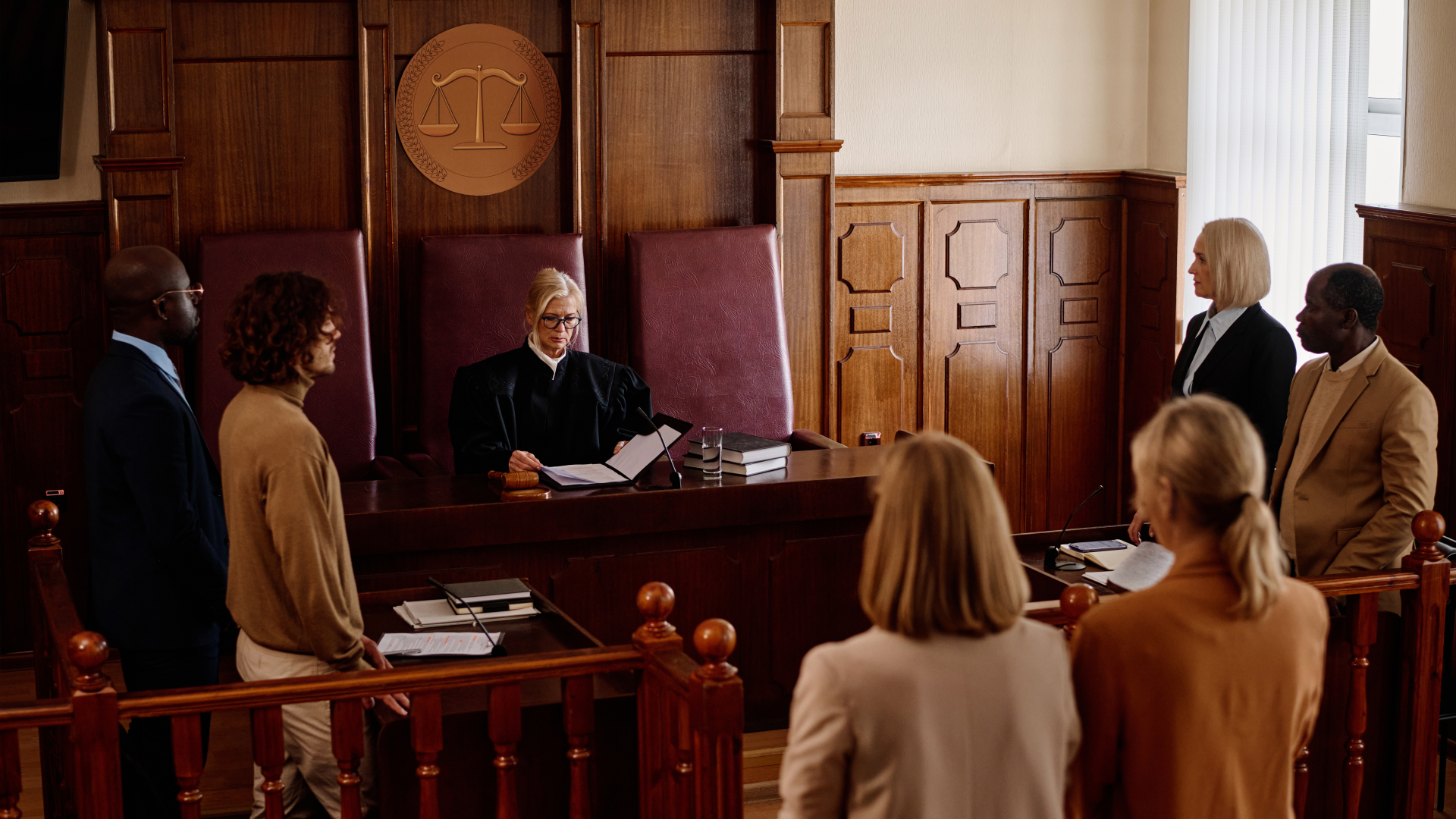
Whether a duty of care exists is a legal question decided by the judge, not the jury, in California personal injury cases. This determination happens before a case goes to trial and sets the framework for everything that follows.
For routine cases, such as a driver hitting another car, a customer slipping on an obvious hazard, the duty is often straightforward to establish.
In more complex or novel situations, such as claims involving third-party criminal acts or pure emotional distress without physical harm, courts apply the Rowland v. Christian framework. This California Supreme Court decision established several factors judges consider when determining if a duty exists in unusual circumstances. This includes:
- Foreseeability of harm
- Certainty that the plaintiff suffered injury
- The closeness of the connection between the defendant’s conduct and the plaintiff’s injury
- Moral blame attached to the defendant’s actions
- Policy of preventing future harm
- The burden on the defendant of imposing a duty
- Consequences to the community of imposing that duty
- The availability of insurance coverage
Once the judge rules that a duty exists and defines the applicable standard, it becomes the jury’s job to decide whether the defendant breached that standard under the specific facts. This is where evidence, witness testimony, and expert opinions become critical.
At Attorney Jeff Car Accident Lawyer, we build cases around these standards from day one. We gather evidence, consult with accident reconstructionists and safety engineers, and present clear arguments explaining why a duty plainly applies to the defendant’s conduct.
When Is a Duty of Care Considered “Breached?”
Once duty is established, the injured party must show the defendant breached that duty by acting less carefully than a reasonable person would have under the circumstances. This is where a personal injury case moves from legal theory to factual proof.
The reasonable person standard asks what an ordinary, careful person would do in this same situation.
For example, a careful driver traveling on I-5 during heavy rain would slow down, increase following distance, and keep headlights on. A driver who maintains highway speeds in poor visibility while looking at their phone has clearly fallen below this standard. Breach examples in California cases include:
- A driver texting on I-5 who rear-ends a stopped vehicle
- A store ignoring a spill for 30 minutes despite staff walking past repeatedly
- A landlord failing for months during 2024-2025 to repair broken stair railings despite repeated tenant complaints
- A rideshare driver running a red light while checking their phone for the next pickup
Breach is typically a question of fact for the jury. They weigh evidence, including witness testimony, surveillance footage, phone records, maintenance logs, dashcam video, and expert opinions, to determine whether the defendant’s actions fell below the required standard.
What if the Plaintiff and Defendant Both Breached Their Duty of Care?
California also applies comparative negligence. A jury may find both parties breached duty, such as in the case of a speeding driver and a jaywalking pedestrian.
The jury assigns fault percentages, and the injured person can still recover damages reduced by their share of responsibility. Unlike some states, California’s pure comparative negligence system will hold a plaintiff liable, while also granting them partial compensation based on their assigned fault.
Duty of Care Across Common California Personal Injury Claims
While the basic concept of duty remains consistent, its application varies across different types of personal injury claims. Understanding these distinctions helps you evaluate your own situation.
Car and Motorcycle Accidents
Drivers owe duties to obey traffic signals, avoid distracted or drunk driving, and maintain safe speeds and following distances. Common breaches on California freeways include texting, tailgating, improper lane changes, and driving under the influence. The risk involved in high-speed freeway travel means even momentary lapses can cause severe physical harm.
Pedestrian Accidents
Drivers have a heightened duty to yield in crosswalks and exercise extra caution in school zones and residential neighborhoods. Regardless of the assumed “right-of-way,” pedestrians also have duties to obey walk signals and avoid darting into traffic. When a driver strikes a pedestrian in a marked crosswalk, the driver’s failure to yield typically constitutes a clear breach.
Slip and Fall / Premises Liability
California property owners must conduct regular risk assessments, promptly fix hazards, post warning signs when repairs aren’t immediate, and comply with building codes requiring proper lighting and handrails. A business that knows about a recurring leak but takes no reasonable measures to address it may face significant liability when someone suffers injury resulting from a fall.
Uber/Lyft and Rideshare Collisions
Rideshare cases involve layered complexity. The driver owes duties of safe operation, but insurance coverage varies based on whether the app is on, whether a ride has been accepted, and whether a passenger is present. Determining which insurance policy applies and how the duty works in these scenarios requires careful analysis.
Dog Bites and Animal Attacks
Dog owners have control and supervision duties. Under California’s strict liability dog bite statute, victims don’t need to prove negligence if they were lawfully on the property or in a public place when bitten. The owner’s legal responsibility attaches automatically in most circumstances, making these cases different from ordinary negligence claims.
Wrongful Death
The underlying duty in wrongful death cases mirrors the duty that would apply to the injured person had they survived. This includes a driver’s duty to other motorists, a property owner’s duty to guests, and a healthcare professional’s duty to patients. The difference is that surviving family members bring the claim to recover for their losses after a fatal breach of duty.
Workers’ Compensation and Job-Related Injuries
Employment law requires employers to maintain safe working environments. Workers’ compensation provides benefits regardless of fault for on-the-job injuries, but third-party negligence claims against careless drivers who strike workers or manufacturers of defective equipment still require proving duty and breach. An employer’s duty to keep employees safe operates alongside these third-party obligations.
How Proving Duty of Care Exists Affects a Case
Establishing a duty of care is the foundation of any negligence-based personal injury lawsuit in California. Without it, a claim cannot proceed, regardless of how serious the injuries are or how clearly someone else caused them.
Proving duty and breach directly affects your case’s settlement value, insurance negotiations, and likelihood of success at trial. Insurance companies routinely deny or reduce claims by arguing that no duty existed or that the defendant’s actions didn’t breach any legal requirement.
Building a strong record on these issues counters those tactics and increases potential recovery for medical care, lost wages, pain and suffering, and other damages.
How a Personal Injury Law Firm Helps Prove Duty of Care
At Attorney Jeff, we take practical steps early to secure evidence related to duty and breach. This includes:
- Obtaining police reports
- 911 recordings
- Security camera footage
- Scene photographs
- Vehicle data recorders
- Medical records
- Safety policies
Preserving this evidence quickly is essential, as memories fade, footage gets deleted, and physical evidence disappears. Additionally, our legal team works with expert witnesses to strengthen personal injury cases. This includes:
- Accident reconstructionists who can explain exactly what happened in a freeway crash
- Biomechanical experts who can connect impact forces to your specific injuries
- Safety engineers who can testify about what a reasonable property owner should have done to mitigate risks and prevent potential harm
These experts help judges and juries understand what reasonable steps the defendant should have taken to prevent an accident that caused harm to the victim. No upfront costs to you or your family. We strive to recover fair and equitable compensation for our clients.
Get Your Free Case Consultation
Conducting Risk Assessments Through a Free Consultation
Our experienced personal injury attorneys work on a contingency fee basis, meaning you pay no upfront costs and owe no attorney fees unless we recover money for your claim. This arrangement ensures that injured clients can enforce their legal rights without worrying about the financial burden of attorney fees during an already difficult time.
If you were injured in a car, motorcycle, pedestrian, rideshare, slip and fall, dog bite, workers’ compensation-related, or wrongful death incident, Jeff’s got you.
Contact us to schedule a free consultation. We’ll review how the duty of care applies to your case, explain your options in plain language, and help you understand what your claim may be worth. With offices throughout California and a team experienced in decision-making on complex injury cases, we’re ready to fight for the compensation you deserve.

Written By
Michelle Jaco
A content strategist and copywriter based in Orange County, she possesses over ten years of professional writing experience. A graduate of San Diego State University with a B.A. in English, she specializes in building brand identity and enhancing reader engagement, with expertise spanning legal content, software startup copy, and lifestyle branding. When she is not writing in her favorite coffee shop, Michelle is typically traveling, running along the beach, and indulging her sports fandom by cheering on the Kansas City Chiefs and Los Angeles Dodgers (she maintains that she is not a bandwagoner).