
 888-970-5729
 600+
600+You’ve just been in a car accident. You’re shaken up and possibly confused about what comes next. As you’re exchanging information with the other driver, a surprising detail emerges: you both use the same insurance company.
What Happens if the Driver Who Hit Me Uses the Same Insurance Company as Me?
At first, it may feel like a fortunate situation—one company to deal with, one streamlined claims process, and fewer complications. Right?
Unfortunately, two drivers sharing the same insurance company doesn’t necessarily simplify the car accident claims process. In fact, these insurance claims can be more complicated, and without a solid grasp of California insurance law, you may end up losing thousands in compensation.
Here’s what California drivers need to know if they share the same insurance provider as an at-fault driver.
How California’s Fault System Affects Your Claim
California is an “at-fault” state, specifically “pure comparative negligence.” This means the driver who caused the accident is liable for the other party’s damages, including medical expenses, lost wages, pain and suffering, and more.
Under California’s pure comparative negligence rule, you can still recover damages even if partially at fault, but your financial award will be reduced by your percentage of blame (e.g., 20% fault means a 20% reduction). This rule applies to both insurance negotiations and court cases.
When both drivers share the same insurance company, a greater degree of fault may be assigned to the claimant if they bear some responsibility for the crash. This is particularly likely if the claimant has less insurance coverage, as they will be responsible for any remaining out-of-pocket damages.
How the Claims Process Works for the Same Insurance Car Accidents
The California Department of Insurance mandates that all cases must be processed fairly and objectively, just as it would be if two separate insurance companies were involved. However, conflicts still emerge.
Are Same Insurance Car Accidents Considered a Conflict of Interest?
To prevent conflicts of interest, most insurance companies assign two separate adjusters to each driver. These separate claims adjusters are responsible for independently:
- Assessing liability
- Reviewing accident reports
- Gathering witness statements
- Determining fault
If the different adjusters agree on liability, the at-fault driver’s policy covers the damages. However, if the claims adjusters disagree, they must treat the situation as if they worked for two entirely separate insurance providers.
Typically, because the two adjusters work for the same company, disputes are resolved internally. Therefore, a car accident claim with your own insurance company may not result in legal action for additional damages, but other legal options against the at-fault driver may be available.
What Happens to Your Deductible?
One genuine benefit in a same-insurer scenario is the potential deductible waiver. Many insurance companies waive the not-at-fault driver’s deductible when both parties are insured with the same company.
The Real Risks California Drivers Face
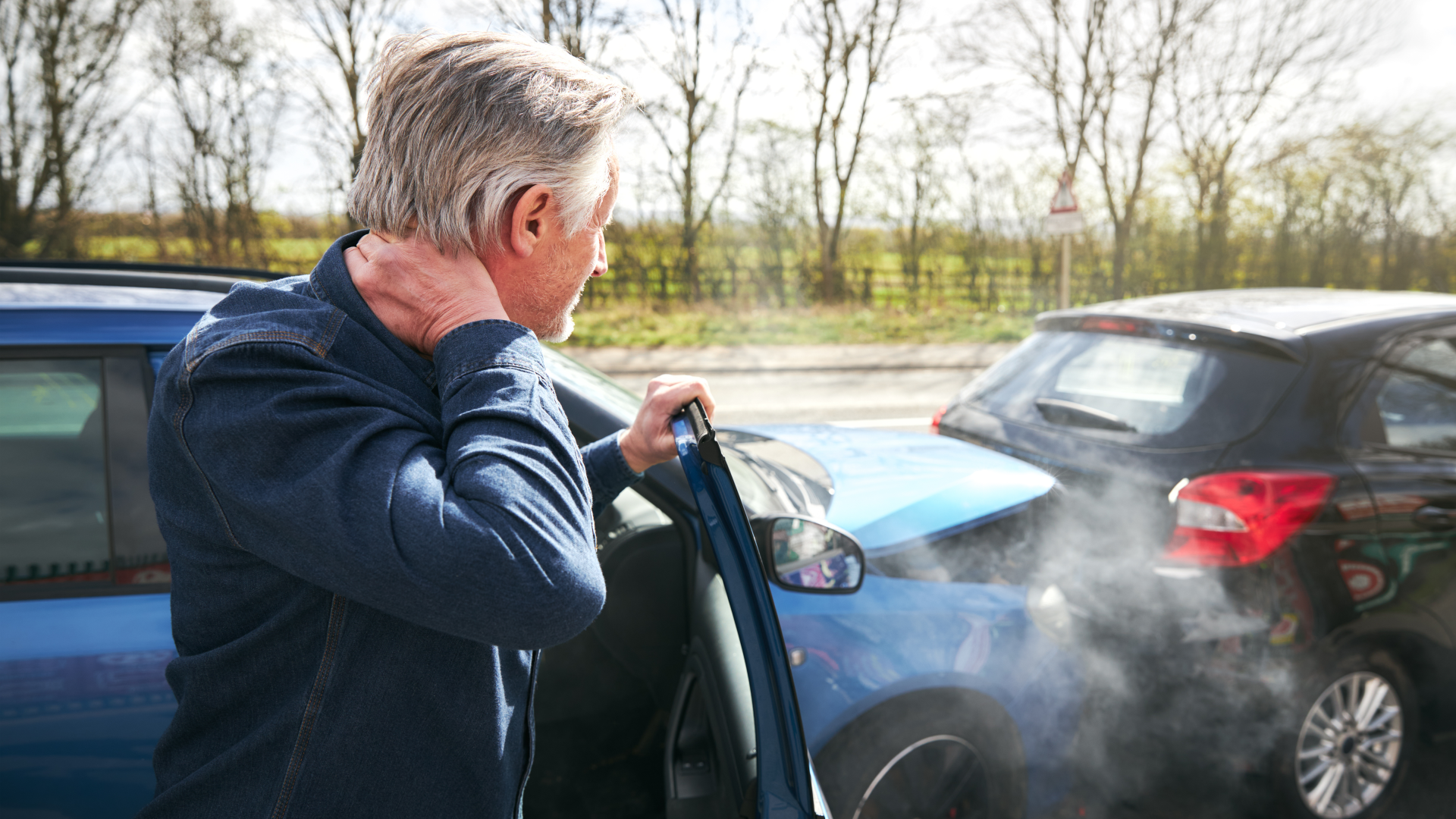
When the same insurer represents both parties involved, conflict may arise. Insurance companies profit by minimizing payouts. Under California’s comparative negligence system, they may assign fault to the claimant to further reduce the total claim amount, resulting in an unfair resolution.
The “Ethical Wall” Problem Prevents Fair Treatment
Insurance companies often claim to create “ethical walls” when both drivers share insurance coverage. This “wall” enforces separate insurance agents to prevent cross-pollination. However, this system is not always honored, leading to bad-faith tactics, such as:
- Assigning only one adjuster to both sides of the claim, creating a clear conflict of interest
- Pressuring the claimant to accept shared fault, even when the other driver is clearly liable
- Downplaying sustained injuries or arguing they’re unrelated to the car crash
- Using unreasonable and prolonged delays to exhaust the claimant into accepting a lowball offer
- Rushing a quick settlement offer before the claimant understands the full extent of damages
Your Insurance Agent Not Being an Advocate
It is crucial to understand that your claims adjuster is not your ally.
Regardless of a good relationship and how many years you’ve been a loyal customer, their primary objective is always to minimize the amount they pay on a claim. Never assume that they will automatically side with you in the event of a disputed insurance claim with the other driver.
What to Do After an Accident if the Other Driver Shares the Same Insurance Provider
The steps you take immediately after a car crash with the same auto insurance company can significantly affect the outcome of your claim. Follow these California-specific guidelines carefully.
1. Prioritize Safety and Call the Police
In California, you are legally required to contact local police or the California Highway Patrol within 24 hours to report an accident that resulted in injuries, fatalities, or property damage exceeding $1,000.
When the police arrive, a police report will be created, providing official documentation that is invaluable when fault is disputed—particularly in a shared-insurer scenario, where both parties’ insurance claims are evaluated by the same company.
2. File an SR-1 Form with the California DMV
Under California Vehicle Code §16000, you must file a Report of Traffic Accident Occurring in California (SR-1 form) with the DMV within 10 days of the accident if anyone was injured (no matter how minor), if anyone was killed, or if property damage to any one person exceeded $1,000.
A police report does NOT fulfill this requirement. You must file the SR-1 separately. Failure to file on time can result in the suspension of your California driver’s license. The form can be submitted online through the DMV’s virtual office or mailed to the DMV’s Sacramento address.
3. Document Everything at the Scene
Photograph all vehicles involved, including close-ups of any damage, wide-angle shots of the vehicles, and the road conditions. Only share your account of events with the police and your insurance company. Also, do not sign statements admitting fault or make any under-the-table agreements with the at-fault driver.
Collect as much evidence as possible. This helps counter the other driver’s claim that you were at fault. Essential evidence includes:
- The other driver’s contact information, license plate number, and driver’s license number
- Insurance company name and policy number, exactly as they appear on the insurance card, from all parties involved
- Names and contact information of any witnesses
- After seeking medical treatment, retain all medical bills to prove damages
4. Notify Your Insurance Company—But Be Careful What You Say
Report the auto accident to your insurance company promptly, as California policies require timely notification. However, be cautious about what is shared. Stick to the basic facts:
- The date and time
- Location of the crash
- What vehicles were involved
- Whether police responded
- Whether anyone was injured
Do not speculate about fault, and do not provide a recorded statement without first consulting a personal injury attorney. Remember that in a same-insurer situation, anything you say could impact your accident claim.
5. Seek Medical Attention Right Away
Even if you feel fine immediately after the crash, see a doctor as soon as possible. Serious injuries like whiplash, soft tissue damage, and concussions are common in car accidents and may not produce immediate symptoms but can worsen significantly in the days or weeks that follow.
Maintaining a detailed medical record is essential for any personal injury claim and counters an insurer’s attempt to argue your injuries were pre-existing or unrelated to the accident.
6. Do Not Accept a Quick Settlement
The insurance companies must protect their own bottom line and do not have your best interest. One of the most common tactics in a car accident case with the same provider is the early lowball offer. This is made before you’ve completed medical treatment or fully understood the full extent of economic and non-economic losses.
Under California law, once you sign a release for damages, that amount is final and cannot be reversed. Do not settle until you know the complete scope of your compensatory damages.
When to Hire a California Car Accident Attorney
If your same insurance company car accident involves significant injuries, disputed liability, signs of bad faith, or is not being handled fairly, consult a California car accident attorney immediately. The benefits include the following.
Aggressive Negotiation for a Higher Settlement Offer
An experienced car accident lawyer will never settle for a lowball settlement and will fight tirelessly to negotiate the maximum compensation available for clients’ injuries and other damages.
Trial-Ready Representation for Fair Compensation
If the insurance company refuses to offer a fair settlement, car accident attorneys prepare the case for trial, presenting the case before a judge and jury to advocate for more money for the client.
Comprehensive Case Management from a Dedicated Legal Team
From investigating the car accident scene and gathering evidence to negotiating with the same car insurance company and coordinating with medical experts, car accident law firms establish the true value of a case and handle everything so clients can focus on their recovery.
Many California personal injury attorneys offer free consultations and work on a contingency fee basis, meaning there’s no cost to you until they win your case.
The Bottom Line for California Drivers
Having the same auto insurance as the at-fault party doesn’t have to derail your ability to get fair compensation, but California’s fault-based system and the insurer’s dual conflict of interest make it essential that you stay informed and proactive. Remember to:
- File your SR-1 with the DMV within 10 days
- Report the accident
- Document everything,
- Be careful what you say to multiple insurers
- NEVER rush into a settlement
Schedule a Free Consultation for Questions About Your Case
When in doubt, Jeff’s got you. Get free, independent legal advice today.
If you were injured in a car accident, Attorney Jeff Car Accident Lawyer can help. Schedule a free consultation with our California car accident lawyers to discover how we can strengthen your claim and secure the compensation you deserve.

Written By
Michelle Jaco
A content strategist and copywriter based in Orange County, she possesses over ten years of professional writing experience. A graduate of San Diego State University with a B.A. in English, she specializes in building brand identity and enhancing reader engagement, with expertise spanning legal content, software startup copy, and lifestyle branding. When she is not writing in her favorite coffee shop, Michelle is typically traveling, running along the beach, and indulging her sports fandom by cheering on the Kansas City Chiefs and Los Angeles Dodgers (she maintains that she is not a bandwagoner).